
Elderberry offers beauty in the landscape and flavor at the table
July 2026
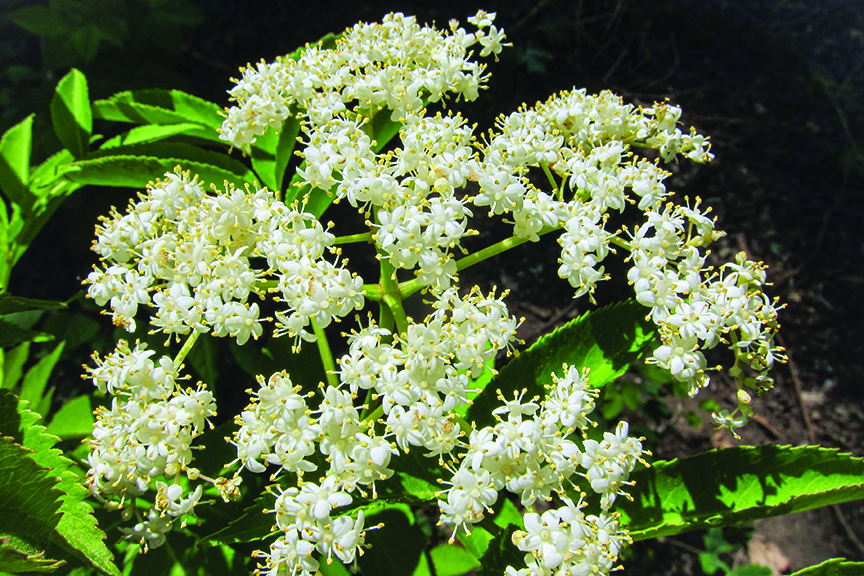
Elderberry’s small, fragrant flowers are grouped into large, eye-catching clusters. (Dave Lage photo via Flickr)
by Steve Carroll, Contributing Columnist
If you are interested in a shrub that has attractive flowers, conspicuous fruit and the prospects for enjoyment at the dinner table, consider the elderberry (Sambucus canadensis).
This widespread shrub tolerates a variety of habitats, growing along streams and in fields, woods, swamp forests, floodplains and roadside ditches. Its tolerance of wet soil means it can be planted in rain gardens, but elderberry does not do well under prolonged drought. Its soft wood also puts this shrub at risk of damage from ice and heavy snow. Elderberry is native from Nova Scotia west to Manitoba, and south to Texas and Florida. Closely related plants that are native to our region include red elderberry (Sambucus racemosa) and several species of viburnum.
Elderberry leaves open in early spring, forming opposite each other along the stem. These compound leaves may be up to 12 inches long, with five- to 11-toothed leaflets (most often seven) that are 3 to 6 inches long. Leaves turn yellow to yellow-green in the fall, but autumn color is not a reason for planting this shrub.
Flowering may occur between April and July, depending on location, elevation, weather and other factors. The fragrant, white flowers are one-quarter inch in diameter, but they make a dramatic visual impact by growing in flat-topped or slightly rounded clusters that may be up to 8 inches across. The quarter-inch, purple-black berries hang in clusters; these ripen in July and August and typically overlap with the end of flowering.
Left to its own devices, elderberry grows as a medium-sized shrub, spreading through suckering and typically reaching a height of 6 to 12 feet. Those who wish otherwise should keep the pruners handy to limit growth to one or a few stems. Given this variation in growth form, elderberry can be grown as a specimen shrub, a border or a screen.
Whatever shape it assumes, elderberry is widely used by wildlife and people alike. Small mammals, turtles and a variety of songbirds and game birds feed on the fruit. Birds are important in dispersing the seeds when they pass through the digestive system and end up at a distance from the maternal plant. Native bees nest and lay eggs in elderberry’s hollow stems and branches, and a number of caterpillars, including those of the cecropia moth — North America’s largest native moth — eat the leaves.
About those dinner table uses: Most of the plant parts, including uncooked fruits, contain cyanogenic glycosides and are toxic to humans. Cooking the fruit breaks these toxins down, at which point the fruit can be used to make jellies, jams, syrups, baked goods and wine. Should you be lucky enough to discover elderberry growing at the back of your lot, as a friend recently did, you face a tough decision: Jam? Pie? Wine? All three?
Steve Carroll is a botanist and ecologist who writes about trees, gardening and the world of plants. He is the co-author of “Ecology for Gardeners,” published by Timber Press.
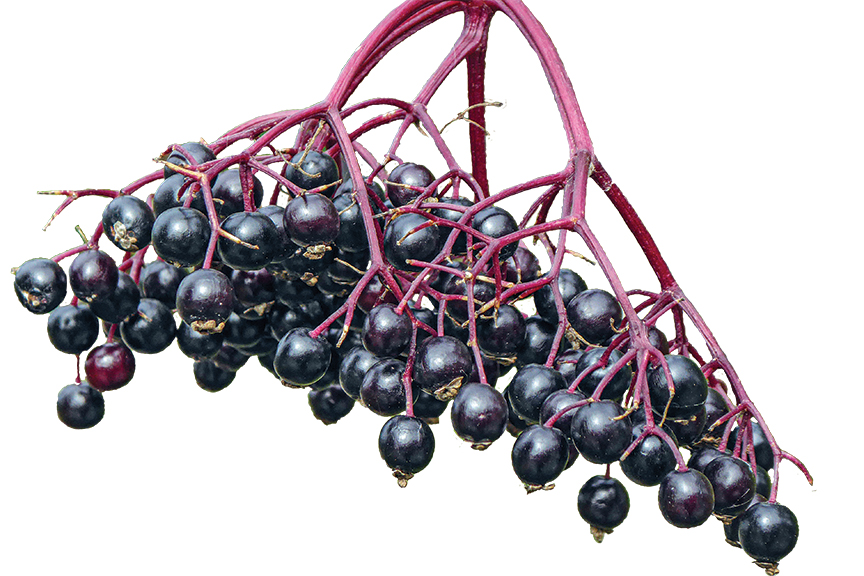
Ripe elderberry fruit (photo courtesy Tim Green via Flickr)