
A reptile museum in Gum Spring, Va., helps visitors warm up to cold-blooded creatures
June 2026
by Amanda S. Creasey, Contributing Writer
If you thought you had to travel to Florida for an alligator experience this summer, think again.
You can find one much closer to home at My Three Chambered Heart, a nonprofit reptile natural history museum in Gum Spring, Va., where Telomere, an American alligator, now lives.
The roughly 5-foot, 23-pound alligator arrived at the museum through a rescue network after being confiscated from an illegal private owner. Telomere is estimated to be between 10 and 12 years old.
“He is a bit stunted growth-wise, so he was probably cooped up and probably didn’t get enough sunlight. We are really excited to introduce him to museum patrons and to let him out into the sun,” explains Jake Pugh, co-founder and executive director of the museum. “Hopefully, he will be as happy as an alligator can be. He has become very special to us.”
Telomere will be active, awake and available for visitors to view in his outdoor enclosure from about May through November, when temperatures remain consistently above 65 degrees.
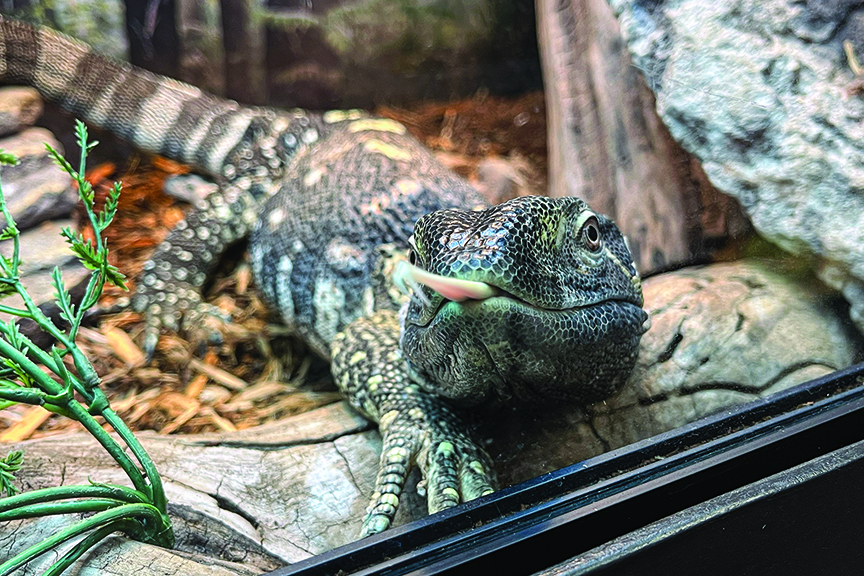
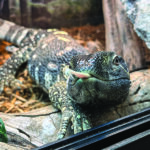
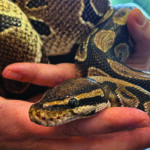
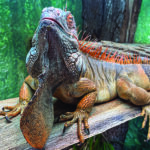
The museum, located in Rappahannock Electric Cooperative’s service area, has more than 65 unique reptile species on exhibit. In addition to Telomere, visitors to My Three Chambered Heart can enjoy seeing Goodly Chunk, a 1-yearold black-throated monitor from Africa; iguanas lunching on little green hornworms; and Thor, a one-eyed Burmese python. Selective breeding processes produced not only the python’s rare color mutation but also a birth defect: Thor hatched with only one eye.
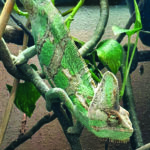
The snake holds a special place in Pugh’s heart. He says, “Burmese pythons are really misunderstood and mistreated, even by other reptile lovers. They need all the love and support they can get.” The museum also houses turtles, tortoises, skinks and other reptiles.
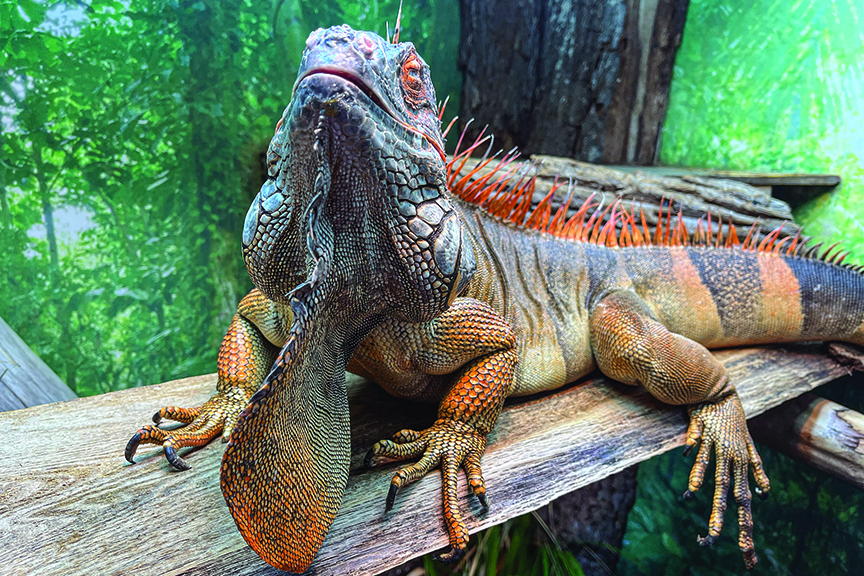
Co-founder Elizabeth Riner, My Three Chambered Heart’s chief financial officer, has a soft spot for the museum’s lizards, especially Bo, short for El Garrobo, the green iguana. “He is a super sweet guy. When you interact with him, you can see what he’s feeling. He would wear his emotions on his sleeve, if he had a sleeve. He loves interaction with people,” Riner says.
Visitors can expect a lot of interaction, or at least as much as they’re comfortable with. “There are animal meet-and-greets,” Riner says. “We’re more than a standard museum.”
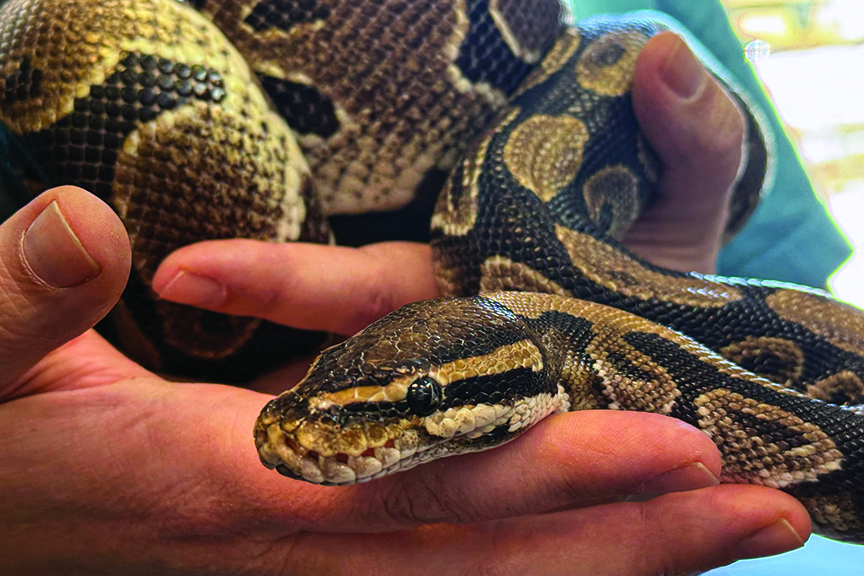
Sister and brother Sage, 11, and Sully, 9, Goode had the opportunity to hold two snakes during their visit: an orange corn snake named Raleigh and a ball python named Ghana. Although initially hesitant, Sully says he enjoyed holding the snake because “he was smooth.” Moments like these are the most rewarding for Pugh and Riner. “We’re really changing people’s minds. If you come in with an open mind, even if you don’t like reptiles, I feel like we can help you change your mind,” Riner says.
During my visit, I held a lizard, wore one snake around my neck and held another, and I can personally vouch for Bo’s endearing and serene disposition. The massive iguana — about the size of a small dog — was as majestic as a statue while I stroked his sandpaper skin. Completely trusting of the throng of children and adults entering his enclosure, he never once even opened his eyes to see whose hands grazed his thorny neck. He simply relished the attention. Bo was Sage’s favorite part of visiting the museum because “he was so chill.”
“Reptiles, especially snakes, are commonly maligned and seen as dark and foreboding,” Pugh says. “We try to tackle that right away. It’s not the vibe of the place. We know people might come in a little guarded, and I hope people leave here with a better appreciation of what the animals are.”
The museum’s mission, he says, is to “promote science literacy while improving public perception, captive husbandry and wildlife conservation of reptiles through museum exhibits and educational outreach.” Pugh hopes people leave the museum “with a greater capacity for understanding.”
For more information, visit mythreechamberedheart.org.