
From rural electrification to today, electric cooperatives remain focused on communities, affordability and reliability
November-December 2026
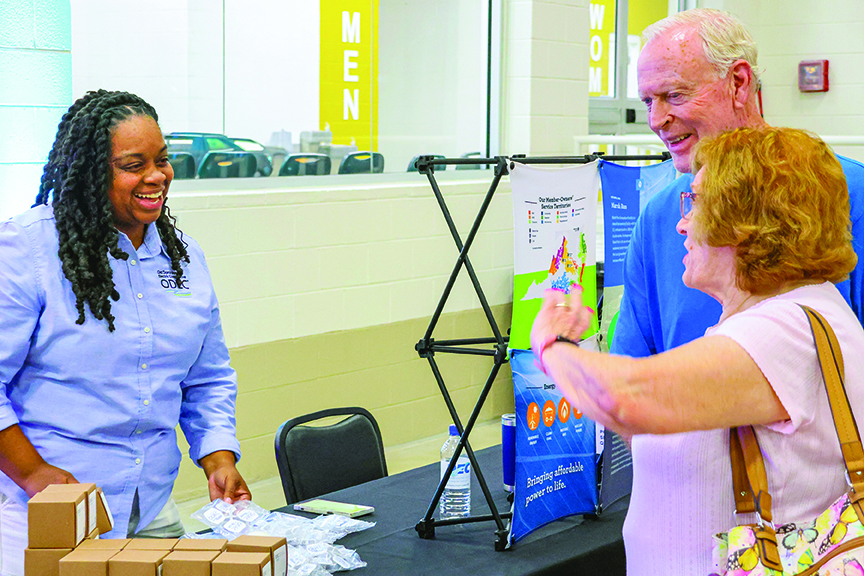
An Old Dominion Electric Cooperative employee attends Delaware Electric Cooperative’s 2026 annual meeting.
by Jack McCarthy, Contributing Writer
This year marks the 90th anniversary of the Rural Electrification Act, the landmark legislation that helped bring electricity to rural America. As part of President Franklin D. Roosevelt’s New Deal reforms, the REA was signed into law on May 20, 1936. Just one month later, Shenandoah Valley Electric Cooperative was established as the first electric cooperative in Virginia.
At the time, roughly 90% of rural Americans remained without power because serving them was viewed as too costly and not profitable enough for privately owned utility companies to justify the investment. With the help of federal loans and other support established by the Rural Electrification Act, communities came together to build electric cooperatives of their own.
Those cooperatives were founded on a simple idea: local people working together to meet local needs. The cooperative model of electrification prioritized service over profit and gave communities a direct stake in shaping their energy future. Ninety years later, those same principles continue to define what makes electric cooperatives different. Unlike investor-owned utilities, cooperatives are member-owned, not-for-profit organizations with a mission to provide reliable, affordable electricity while powering and empowering their communities. From the beginning, cooperatives were built on the belief that when people work together to solve shared challenges, everyone benefits.
LOCAL VOICES
One of the clearest examples of the cooperative difference is how they are governed. Member-owners elect fellow members from their communities to serve on their cooperative’s board of directors. Those directors help set priorities, provide oversight and ensure that decisions remain grounded in the needs of local communities.
This structure creates accountability unique to the cooperative model. The people helping guide the cooperative are not distant investors or shareholders. They are community members who live in the areas the cooperative serves, use the same electric service and share many of the same priorities as the people they represent.
That member-focused approach is especially evident during a cooperative’s annual meeting, when member-owners gather to learn about cooperative activities, hear important updates on the business of the cooperative and participate in director elections. These meetings are an important part of cooperative governance, providing members with an opportunity to shape the future of their cooperative and ensure local leadership remains accountable to the communities it serves.
STRONGER TOGETHER
The cooperative model extends beyond the local level as well. Many electric cooperatives throughout Virginia, Maryland and Delaware jointly own Old Dominion Electric Cooperative, a generation and transmission cooperative. Through ownership of their power provider, local cooperatives have a voice in how power is planned, generated and delivered across the region. Like local distribution cooperatives, generation and transmission cooperatives such as ODEC are governed by a board of directors representing their member cooperatives and operate to meet the needs of the communities the members serve. That ownership creates benefits that extend far beyond governance.
By working in close partnership with a generation and transmission cooperative, local electric cooperatives can pool resources, share expertise and invest in infrastructure that would be difficult for any single cooperative to develop on its own. The result is a larger network of cooperatives working toward a common goal: delivering affordable, reliable power to their members.
PLANNING FOR THE FUTURE
Because generation and transmission cooperatives such as ODEC plan for the long term and manage a diverse portfolio of generation resources and power purchases, they can help reduce reliance on short-term market purchases and exposure to market volatility. Shared ownership allows cooperatives to make investments together, coordinate future needs and work to provide greater stability for the communities they serve.
In many ways, this reflects the same spirit that inspired rural electrification nearly a century ago. The scale may be larger, but the principle remains remarkably similar. Communities can often accomplish more together than they can alone. And when people are at the heart of an organization, decisions look different.
What began as neighbors working together to bring electricity to rural America has evolved into a vast network of member-owners, directors, employees and cooperatives collaborating to provide affordable, reliable power for millions of people.
And there is no shortage of challenges ahead.
Demand for electricity is rising at a pace not seen since World War II as our lives become more connected to the grid. And while demand increases, many power plants across the country have been retired, or are forecasted to retire, before the end of their useful lives. Yet even as the energy industry evolves, the principles that guided the first generation of cooperatives remain unchanged.
Electric cooperatives still exist to serve their members. They are still governed by local leaders elected by the people they serve. They still believe in the power of collaboration, and they still place community needs at the center of every decision.
Ninety years after the Rural Electrification Act helped bring electricity to rural America, the cooperative difference remains as relevant as ever. Technology may change. The energy mix may evolve. The demands placed on the electric system will certainly continue to grow. But the mission endures.