
Prepare now for a warm, worry-free winter
October 2026
by Alice Kemp, Virginia Farm Bureau Federation
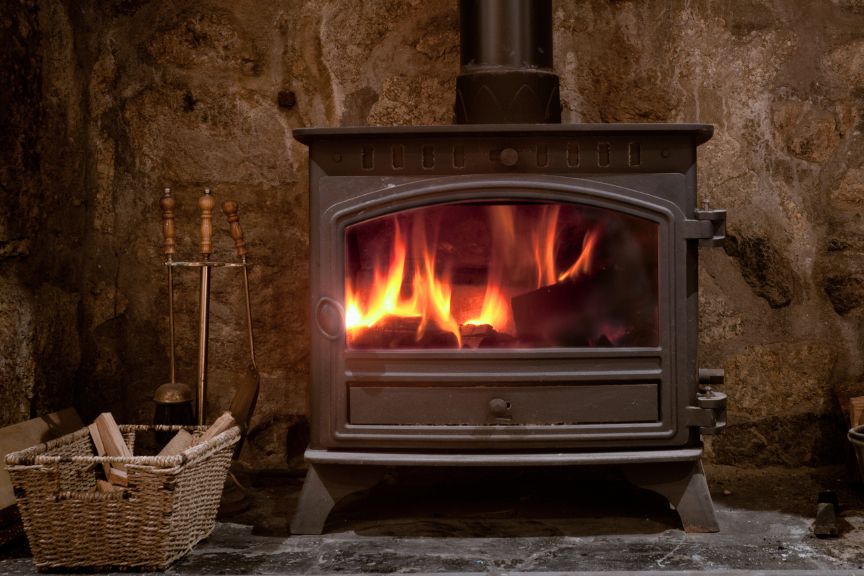
After long, chilly days on their Christmas tree farm, Ronald and Roberta Clouse enjoy warming up by a woodstove.
“When I’m plowing snow or if we’re working outside all day in the cold, it’s nice to come in and get near the woodstove,” Ronald says. “It puts out a good heat.”
With their rustic charm, crackling woodstoves offer cozy retreats during frigid winters. But that comfort comes with responsibility — without proper care, woodstoves can pose serious fire risks.
MAINTENANCE ROUTINES
The couple heats their home with two woodstoves, and they begin preparations well before the first frost. Their chimneys are inspected and thoroughly cleaned each fall, and Ronald checks the woodstoves — replacing cracked or deteriorating firebricks to keep them functioning safely and efficiently.
“I also check the chimneys about midway through the heating season to ensure everything’s still in good shape,” he notes. Each stove sits on a 4-by-4-foot stone hearth without furniture or anything that could catch fire nearby.
CLEAN CHIMNEYS
“The main issue we run into with woodstoves is chimney fires,” says Nathan Fox, chief of Tazewell County’s Clearfork Volunteer Fire Department. “Mostly they’re due to poor chimney maintenance or burning wood that hasn’t been properly seasoned.”
According to the National Fire Protection Association, heating equipment is the second-leading cause of home fires and the third-leading cause of home fire deaths. Dirty chimneys, usually caused by creosote buildup — highly combustible residue that accumulates inside chimneys — is a leading cause of chimney fires. While small amounts of creosote are normal when operating woodstoves, burning wet or unseasoned wood causes creosote to accumulate faster and can restrict air flow. Left untreated, creosote buildup significantly increases fire risk.
A 20-year veteran of the fire service, Fox has responded to attic fires caused by neglected, cracked chimneys. He advises having working smoke and carbon monoxide detectors around the house and keeping a fire extinguisher nearby. Call 911 as soon as you think there may be a problem, he says.
“Time is never on your side when fighting fire,” Fox says. “It takes time for dispatch to page the fire department and for fire fighters to arrive. That one phone call will get the ball rolling.”
- Burn dry, well-seasoned hardwood. Don’t burn wet or green wood, paper, plastic or other materials. Don’t overload woodstoves with too much wood.
- Have chimneys inspected and cleaned annually by a professional.
- Keep a 3-foot clearance around stoves — free of rugs, furniture, drying clothes or anything flammable.
- Inspect and maintain woodstoves. Check firebricks for damage, inspect door seals and stovepipes, remove ash, and replace gaskets and parts as needed.
- Use dampers and air controls properly to control air intake and regulate the burn, minimizing creosote and ensuring unrestricted airflow.
- Extinguish the fire before you go to sleep or leave home.
- Use a metal container with a lid for ashes, and place it outside at least 10 feet from your home.
- Test smoke and carbon monoxide detectors monthly and replace batteries as needed.
- Keep a fire extinguisher within reach and make sure everyone in the home knows how to use it.