
Middle Peninsula residents find success and connections in kennel club competitions
October 2026


by Audrey Hingley, Contributing Writer
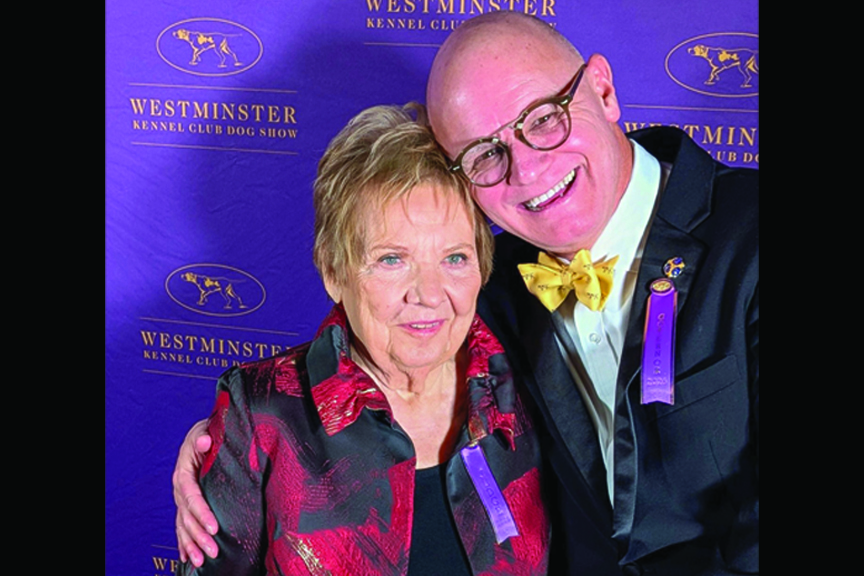
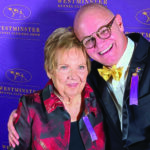
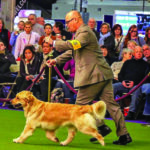
The excitement surrounding the now-iconic annual Westminster Kennel Club Dog Show held in New York City each February is visceral for two rural Virginia residents who played important roles in the 2026 show. Polly Smith of St. Stephens Church in King and Queen County, Va., judged the terrier group, and Michael Faulkner of Center Cross in Essex County, Va., judged the WKC’s Junior Showmanship finals where the best junior handler was selected.
Faulkner juggles his “dog career” with his job as executive director of the Ledwick-Lewis Free Clinic in Tappahannock. Smith is a retired widow with one adult son. The two have traveled intertwining routes in the kennel club community.
CHILDHOOD CONNECTION
The WKC “has been part of my total existence from early childhood until now,” Faulkner says. He vividly remembers the first time he was asked to judge the sporting group, one of seven categories featured in the annual dog show.
“The evening before the competition, I went over to [New York City’s] Madison Square Garden with a colleague to do a preproduction run-through because the show [airs live on television],” he says. “We were way up in the nosebleed section in a totally empty arena looking down as I reflected on the importance of the moment. Never in my wildest dreams did I think I would be there. … And it all started with the love of dogs.”
Smith also traces her love of animals to childhood. She was introduced to dog shows by her grandparents’ neighbor, who raised and showed chow chows. She recalls dressing up one chow chow named Chinese Jade, putting a leash around his neck and walking him around pretending to compete in a dog show.
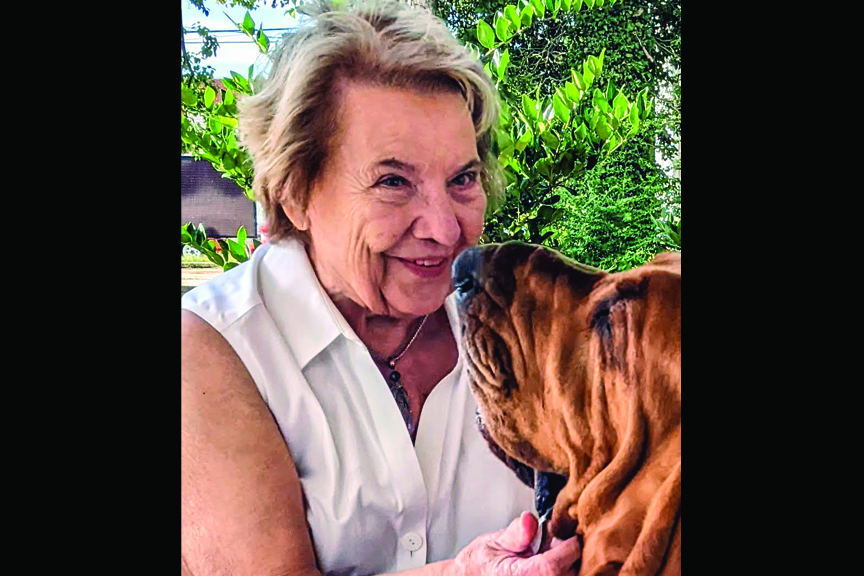
In the 1960s, Smith and her late husband Dr. Robert Smith started breeding and showing American foxhounds. Their kennel produced numerous champions and best-in-show winners over several decades. They also bred Welsh terrier and beagle champions, but the American foxhound remains Smith’s favorite dog breed. American foxhounds are low-maintenance, good-natured hounds who get along well with children, other dogs and even cats. They are sleek hunters known for their speed, endurance and work ethic. Their large eyes have a gentle and pleading expression.
Smith is a founding member of several kennel clubs, including the Middle Peninsula Kennel Club, based in Doswell, Va. She has competed and judged at the WKC many times as an American Kennel Club-licensed all-breed judge.
“Years ago, when we got started, you were invited to be a judge,” she recalls. “[My husband and I] were both exhibitors and handlers. Now you have be a licensed judge through the AKC. You apply, do tests and are interviewed by AKC representatives [to be a] provisional judge. You must have 12 years as an exhibitor to apply, and you must have bred three champions.”
Faulkner, a third-generation dog aficionado, says, “My grandparents had great danes, my mom had field spaniels and my aunt had collies.”
His passion for dogs has carried him through junior showmanship, a lesser-known competition in the WKC for participants ages 9 to 18 who compete for post-secondary scholarships, and he continues today through his roles as breeder, owner, handler, judge and mentor.
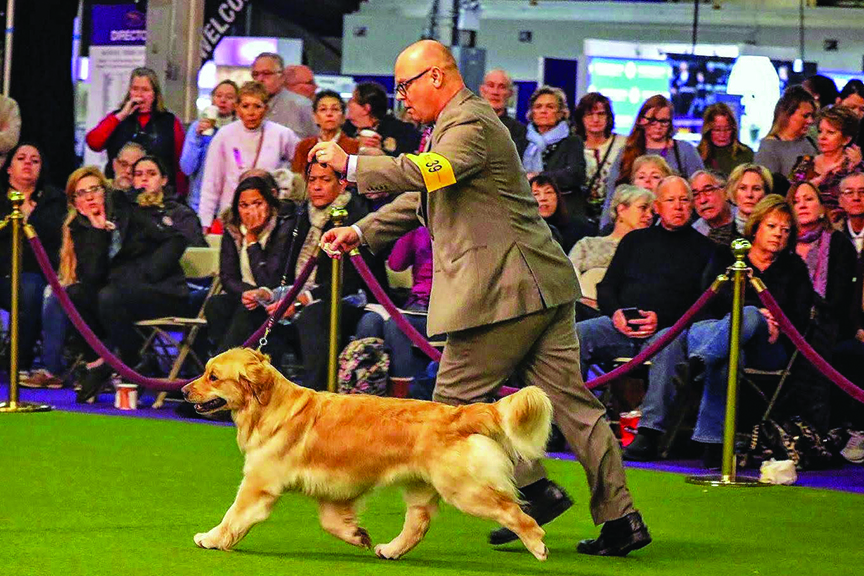
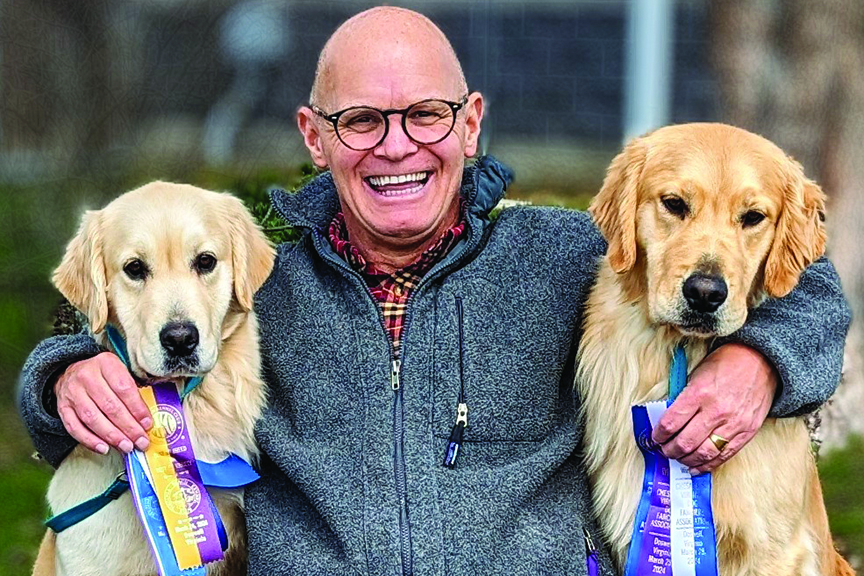
In addition to these roles, Faulkner has been involved in extensive breeding programs, breeding and handling golden retrievers and several other breeds, and handling multiple best-in-show winners.
“The golden is my lifelong favorite,” he says. “They are highly intelligent, kind, gentle and willing to please. The bond between human and dog is intense, and they are beautiful.”
Smith says many people get started in the dog show world through obedience training. Faulkner says many young people begin through involvement in 4-H clubs.
DOG SHOW CULTURE
To a casual observer, competing at the WKC dog show may seem uncomplicated, but the process is anything but simple.
Regarding both dog show participation and breeding, Faulkner admits, “It’s expensive. Anything you do well in will cost you money. I show my own dogs, and we also have handlers, and that is not cheap.”
WKC competitors have to consider costs such as training, grooming, transportation, travel and lodging, entry fees and marketing expenses.
Established in 1877, the Westminster Kennel Club Dog Show is the oldest organization in America dedicated to the sport of purebred dogs, as well as the second-longest continuously held sporting event in the country, behind the Kentucky Derby, which debuted in 1875. WKC predates the formation of the AKC by seven years and was the first club admitted to the AKC after its founding in 1884. It’s also the longest nationally televised dog show, broadcast since 1948. Television has allowed the public to see both the level of competition and the quality of different breeds. It has contributed to making Westminster a serious sporting event. In addition to airing on FOX Sports, the WKC recently announced its Feb. 2, 2027, show will stream live on Net flix.
Originating as a show for “gun dogs” (primarily setters and pointers), the WKC was founded by a group of sporting enthusiasts who gathered at New York City’s long-gone Westminster Hotel bar to drink and talk about their dogs. Today, the WKC show includes more than 200 breeds and varieties recognized by the AKC. Dog entrants are divided into seven categories: sporting, hound, terrier, toy, working, herding and non-sporting.
WKC has broadened its reach over the years, and mixed breed dogs compete in some performance events, such as barn hunt, agility and obedience. Since 1987, WKC’s Westminster Foundation has awarded $4.8 million in scholarships to veterinary students at six universities. WKC’s mission celebrates the companionship of dogs, promotes responsible dog ownership and breed preservation.
Dogs are judged by how closely they conform to breed standards, which describe the characteristics of the ideal specimen for that breed that relate to form and function. These written conformation standards are created, maintained and owned by the national breed club for each respective breed and approved by the AKC. Most standards describe general appearance, movement and specific physical traits, such as height, weight, coat type and coat color. Competition judges conduct hands-on examinations of dogs and watch them in motion.
Dogs compete against others of their breed, with each breed’s winner moving to a semifinal judging round. Group winners advance to best in show during the televised event. The designation best in show has been awarded since 1907.
Like the canine crowned best in show, considered the highest distinction in American dog competition, Faulkner is not paid for his WKC work.
Winners are awarded trophies, such as a polished pewter trophy and The Westminster Legend Trophy, a hand-engraved Steuben crystal bowl. Winning best in show does provide opportunities. The winning dog receives sponsorships, can earn money for appearances and may see its value in breeding greatly increase.
Faulkner, who says the dog world is “extremely welcoming,” was surprised recently when he was invited to become a Westminster Club Member — the only WKC member in Virginia. He calls winning at the WKC show “the [pinnacle] of your career. … It validates your career by winning a show.”
The Middle Peninsula Kennel Club of Virginia Dog Show, headed by Polly Smith, will be held Oct. 24 at Meadow Event Park in Doswell, Va. Spectator admission is free; parking is $5.