
An overview of the regional carbon program
October 2026
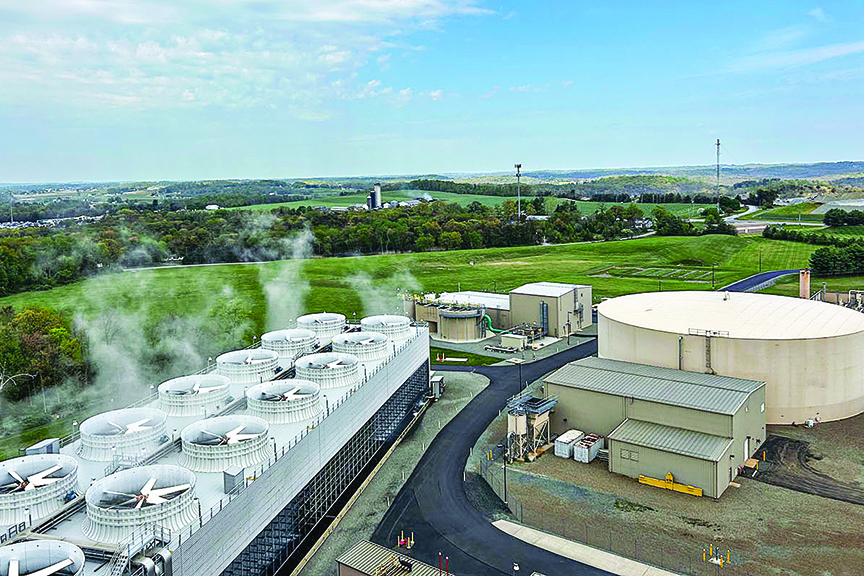
Wildcat Point, an ODEC-operated power generation facility in Cecil, Md.
by Jack McCarthy, Contributing Writer
With Virginia’s return to the Regional Greenhouse Gas Initiative, as of July 1, 2026, ratepayers in Virginia, Maryland and Delaware now all participate in the regional carbon program.
State energy policy shapes how electricity is produced, priced and delivered across the region. One such policy, the Regional Greenhouse Gas Initiative, commonly known as RGGI (pronounced “Reggie”), is a program that has significant effects on energy and affordability. While Maryland and Delaware have participated in RGGI since the program’s early years, Virginia rejoined the program July 1, 2026, after participating from 2021 through 2023. Here’s a look at what RGGI is, how it works and where things stand today.
WHAT IS RGGI?
The Regional Greenhouse Gas Initiative is a multistate program designed to reduce carbon dioxide emissions from power plants across participating Northeast and mid-Atlantic states. Often described as a cap-and-trade program, RGGI places a limit on carbon emissions from power plants in participating states.
Each year, the number of allowances available is gradually reduced, limiting the supply over time. Under the program, power plants subject to RGGI must buy carbon allowances based on the amount of carbon dioxide they emit. Allowances from participating states are primarily sold through quarterly RGGI auctions, although they can also be bought and sold on a secondary market. The auction price can change based on the number of allowances available and demand, including from power plants that need allowances to meet RGGI requirements. RGGI is designed to encourage greater use of low- and zero-carbon generation sources that require fewer or no allowances.
Revenue generated from the sale of allowances is distributed to participating states, which decide how the funds will be used. For utilities with power plants subject to RGGI, the required purchase of allowances is an additional compliance cost that increases the cost of generating electricity that is passed on to the ratepayer. How the revenue is used varies by state and may include energy efficiency, weatherization, flood mitigation, consumer assistance or other efforts to help offset some of the costs for customers, including bill credits.
Today, RGGI states include Virginia, Maryland and Delaware — the three states served by Old Dominion Electric Cooperative’s member co-ops — as well as Connecticut, Maine, Massachusetts, New Hampshire, New Jersey, New York, Rhode Island and Vermont. Maryland and Delaware have participated in the program for many years. Delaware was one of the original states to sign the RGGI agreement in 2005, Maryland joined the agreement in 2007 and the program’s first compliance period began in 2009.
VIRGINIA’S HISTORY WITH RGGI
Virginia’s involvement with RGGI has changed several times over the past six years.
In 2020, the Virginia General Assembly passed legislation directing Virginia to participate in RGGI, and the commonwealth began participating in the program in 2021 under Gov. Ralph Northam. Under Gov. Glenn Youngkin, Virginia pursued a regulatory withdrawal from RGGI and ended its participation after 2023.
That action was challenged in court, and in 2024, a circuit court ruled that the regulatory repeal was unlawful. The state appealed the ruling, and Virginia remained outside RGGI while the appeal was pending, which was officially withdrawn in March 2026. Following action by the Virginia General Assembly and Gov. Abigail Spanberger earlier this year, Virginia rejoined RGGI, with compliance obligations resuming July 1, 2026.
WHERE THINGS STAND TODAY
As of July 1, 2026, Virginia is once again participating in RGGI, making compliance with the program a requirement under state law. The resulting compliance costs become part of the overall cost of providing electricity.
The price of RGGI allowances can change from one auction to the next based on the number of allowances available and demand. In the June 2026 auction, allowances sold for $35 each. That compares with $14.88 per allowance in December 2023, the final auction held during Virginia’s previous participation in the program. The allowance cost will continue to increase based on RGGI’s further allowance reduction goals.
RGGI is one example of how energy and environmental programs can influence the cost of producing and delivering electricity. As the energy landscape continues to evolve, electric cooperatives remain focused on keeping members informed, managing costs wherever possible and ensuring the reliable, affordable electricity our communities depend on.