
Farm equipment traveling rural routes poses dangers for farmers and motorists
September 2026
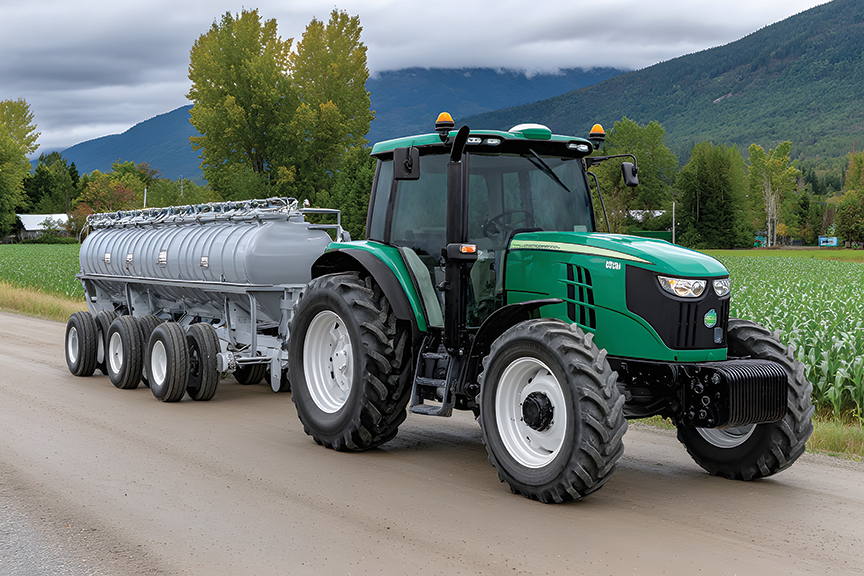
According to the National Safety Council, approximately 15,000 farm vehicles are involved in highway crashes annually. (Vecteezy photo)
by Nicole Zema, Virginia Farm Bureau Federation
King William County Farm Bureau president and lifelong farmer Charlie Piersa can see all the extra traffic on the road from his vantage point in the tractor cab.
He says farms are getting smaller, equipment is getting bigger and rural roads are becoming more congested as the area accommodates increasingly more residential development.
“I can see them coming,” Piersa says. “Some drivers take the back roads at 60 mph, going around curves on the wrong side of the road. My front end was almost hit twice this year. Eventually, somebody won’t be so lucky, because one of us will get hit.”
According to the National Safety Council, approximately 15,000 farm vehicles are involved in highway crashes annually. By and large, incidents involving passenger vehicles and farm equipment occur most frequently between May and October, from the start of spring planting through the fall harvest.
Driver impatience is pervasive as Piersa moves equipment between fields. “They’ll get behind you on the back road and blow their horn at you,” he says.
SLOW THE ROLL
While it can be tempting to try to pass farm equipment, motorists should remember that it’s illegal to pass on a solid yellow line, explains Matt Nuckols, Virginia Farm Bureau safety coordinator. Even when passing is permitted, he advises against it.
“Most of this equipment is not traveling very far,” he says, “so if you do get behind one, just a little bit of patience can go a long way — because they’re likely not going more than a mile or two.”
Nuckols also urges motorists to slow down when approaching farm equipment and leave enough space to stop. Even with a vantage point, equipment operators cannot see drivers who are following too closely.
“There’s no benefit to being right on top of a tractor or piece of farm equipment,” he notes. “Just leave some extra space and remember that they will likely be turning pretty soon.”
Piersa recalls a highway crash several years ago in which his agricultural equipment was hit by a wood truck. He lost a planter and a tractor. There were no injuries, and the truck driver paid only a small fine. “Even though [the truck driver] was on the wrong side of the road, on a short curve over [double yellow] lines,” Piersa says.
Other crashes involving farm equipment in the region have ended tragically, he says. Piersa wants motorists to consider the big picture when encountering farm equipment on roadways.
“Even though farmers are getting smaller as a group, and family farms are slowly disappearing,” he says, “remember to respect the ones who are still putting the food on your table.”
Visit vafb.com/safety to learn more about the Virginia Farm Bureau Safety Program.
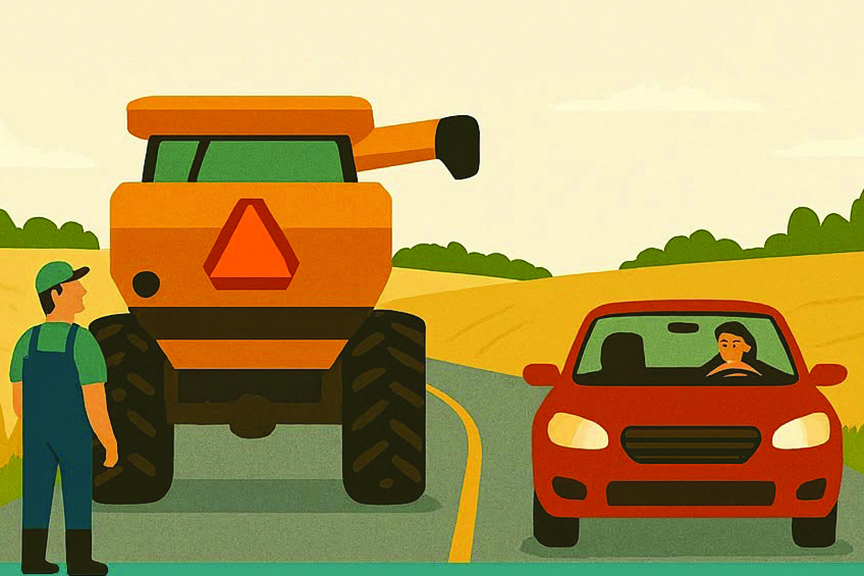
Slow Moving Vehicle signs are intended for farm equipment moving at a slow pace on roadways and highways. (Courtesy U.S. Department of Agriculture)