Cooperatives explore technology’s potential to boost service, reliability
August 2026

As co-ops explore AI tools, they are doing so cautiously, evaluating where it can add value while maintaining a strong focus on member needs, privacy and system reliability.
by Abby Berry, Contributing Writer
Like it or not, artificial intelligence seems inescapable. Even a quick Google search produces an AI-generated smorgasbord of results, rather than a simple list of links. AI is even shaping conversations about the future of energy.
While news headlines often focus on the rapid growth of AI, electric cooperatives are taking a measured approach to understanding how these tools might help improve service for the local communities they serve.
For some co-ops, their goal is not to adopt AI technology simply because it’s new. Instead, any tool or innovation must provide a clear benefit to cooperative members, whether that’s improving power reliability, increasing operational efficiency or helping a co-op team make better-informed decisions. As co-ops explore AI tools, they are doing so cautiously, evaluating where it can add value while maintaining a strong focus on member needs, privacy and system reliability.
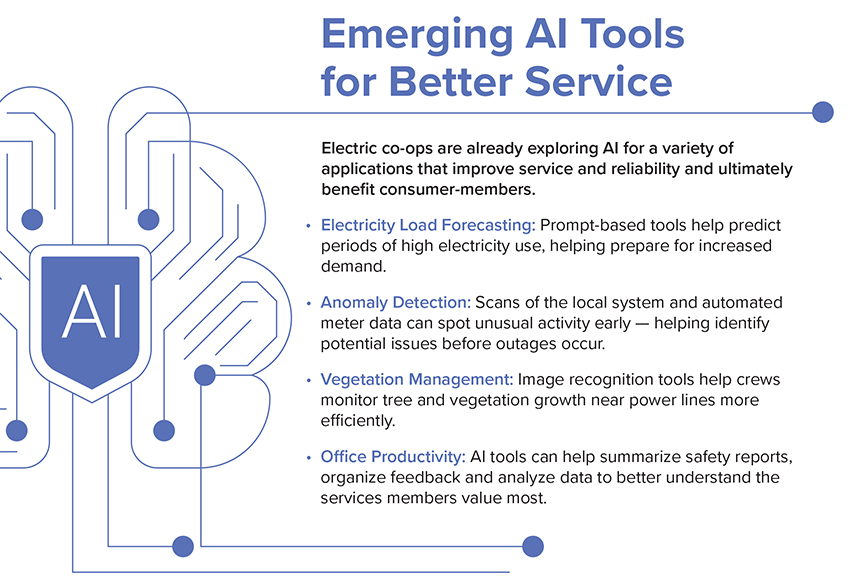
One area where AI shows promise is electricity load forecasting. Electric demand changes throughout the day and fluctuates significantly during periods of extreme weather. Advanced forecasting tools can analyze historical data, weather patterns and additional factors to help predict when electricity use is likely to increase. Better forecasts allow co-ops to prepare for higher demand, manage resources more effectively and support reliable service during peak periods.
AI tools are also being used to identify potential problems along the local grid before they lead to power outages. By analyzing information from automated meters and other equipment across the electrical system, AI-powered tools can detect unusual patterns or anomalies that might otherwise go unnoticed. These early warnings could help co-op crews investigate issues sooner, potentially reducing the likelihood or duration of outages.
Maintaining power lines is another critical area where AI technology may offer benefits. Trees and overgrown vegetation are among the leading causes of power outages. Many electric utilities, including co-ops, are exploring image recognition tools that can help monitor vegetation growth near power lines more efficiently. Rather than replacing the expertise of field crews, the technology can help identify parts of the system that need attention, allowing crews to prioritize work areas and make the best use of their time.
Beyond the electrical system itself, AI could also improve day-to-day operations. For example, AI tools can assist office employees by summarizing lengthy reports, organizing member feedback and analyzing large amounts of data. These types of tools could help co-op teams spend less time on repetitive administrative tasks and more time focusing on members and addressing a community’s energy needs.
Even with these potential benefits, cooperatives recognize that AI is not a cure-all. Human oversight remains essential, and decisions that affect members will never rely solely on automated systems.
As AI tools evolve, electric cooperatives will continue exploring their potential. But as with any new technology, adoption will be guided by a simple principle: If an AI tool helps improve reliability, efficiency or services for a co-op’s members, it’s worth considering. If it doesn’t, co-ops will continue exploring solutions that do.
Abby Berry writes on consumer and cooperative affairs for the National Rural Electric Cooperative Association, the national trade association representing more than 900 local electric cooperatives.