
Home lighting that’s efficient, cool and cost-conscious
July 2026
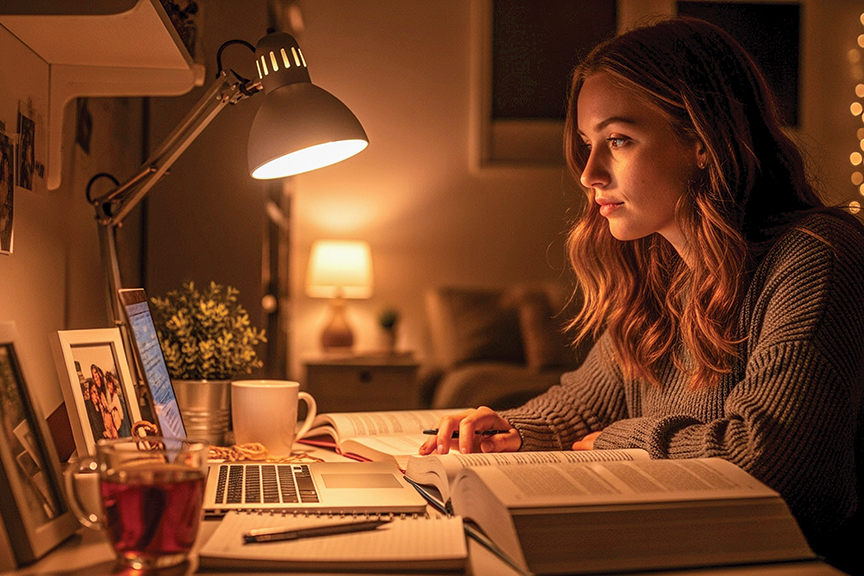
(Vecteezy photo)
by Abby Berry, Contributing Writer
Maybe your living room is too dim to read, or the lighting fixtures in your kitchen cast an odd yellow glow. We often grab whatever bulb or fixture looks good in the store or online without considering how it will actually perform in the space. But with a little planning, you can make your home brighter, cozier and more energy efficient.
WATTS VS. LUMENS
When you’re shopping for light bulbs, remember that watts measure only how much energy a bulb uses. When it comes to brightness, what matters most is the lumen count. Lumens measure the actual light output.
Higher lumens mean brighter light, while lower wattage means less energy consumed. You’ve likely already replaced all incandescent bulbs with long-lasting, energyefficient LEDs, but if not, it’s time to make the switch.
Remember to check wattage ratings for fixtures and install only bulbs that meet the fixture’s safety requirements.
COLOR TEMPERATURE AND CONSISTENCY
Light bulbs vary in color temperature, from warm yellow to cool white and even bluish tones. To maintain a consistent look, consider buying and installing bulbs of the same brand and wattage in a room at the same time.
DIMMERS AND SWITCHES
Installing dimmers instead of standard on/off switches can be a game changer. Dimmers help save energy and allow you to match the brightness to fit the moment. Not all bulbs are dimmable, though, so double-check labels before buying.
While you’re thinking about light switches, consider whether you have enough of them — and whether they’re in the right places. A light you turn off only off from one end of a hallway quickly becomes annoying. For new installations or upgrades, hire a licensed electrician to ensure everything is wired safely and efficiently.
FIXTURES: FORM MEETS FUNCTION
Bulbs are only part of the equation; fixtures matter too. Each type serves a purpose. Ambient lighting from sconces or glass-covered ceiling fixtures provides general illumination. Task lighting, such as pendants, desk lamps and track lighting, focuses light where you need it most.
When choosing a fixture, ask yourself: Does this light provide the right amount of brightness for the space? A chandelier may offer the perfect aesthetic over a dining table but can leave the rest of the room too dim. An oversized fixture could flood the room with more light than you need, wasting energy and money.
SMART LIGHTING: ENERGY EFFICIENCY MEETS CONVENIENCE
Smart lighting adds another layer of control and convenience for illuminating your home. With smart bulbs, you can adjust brightness, set schedules or even change colors — all from your phone or a voice assistant such as Alexa or Google Assistant. You can dim all the lights at once for movie night or turn them on before you get home.
Remember, smart bulbs still rely on power from your wall switch, which needs to stay in the “on” position for remote control to work. If you prefer using a physical switch, consider pairing smart bulbs with a smart light switch.
Abby Berry writes on consumer and cooperative affairs for the National Rural Electric Cooperative Association.
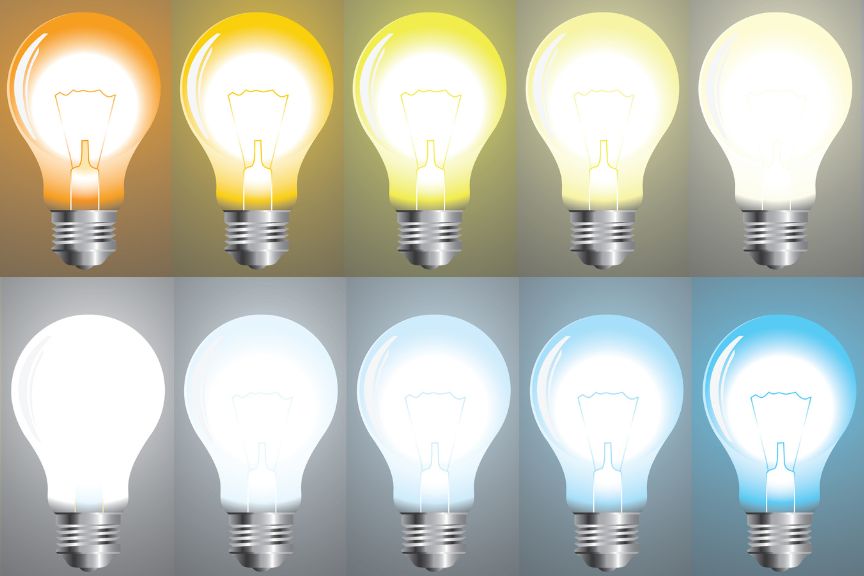
Light bulbs vary in color temperature, from warm yellow and cool white and even blueish tones.