
Celebrating the sixth decade of Cooperative Living
July 2026
by Laura Emery, Staff Writer
In celebration of Cooperative Living’s 80th anniversary, each issue this year spotlights one of the eight decades since this publication — first published in October 1946 — began inspiring, informing and connecting electric cooperative members.
During the magazine’s sixth decade, from 1996 through 2006, Rural Living, which was later renamed Cooperative Living, continued balancing nostalgia and tradition with a rapidly changing world. Debates over electric deregulation, the rise of internet culture, natural disasters, national tragedy and the approach of a new millennium filled the magazine’s pages.
A WIRED WORLD
The January 1996 issue announced that Rural Living would transition from 12 issues a year to 10. In March 1996, readers were introduced to the “information superhighway” and the rapidly expanding “World Wide Web.”
The July 1996 issue featured the headline “Gee-Whiz, Bob, What’s a CPU?” while also profiling a Shenandoah Valley Electric Cooperative member who recalled having electricity for the first time.
In the October 1996 issue, Rural Living celebrated its 50th anniversary.

READER FAVORITES
Several long-running reader favorites debuted in 1997. The Food for Thought column, written by then-Northern Virginia Electric Cooperative board member John Bonfadini, tackled controversial topics ranging from school prayer and cancer to sex education and standardized testing.
The Down Home column debuted and quickly became one of the magazine’s most beloved features. The series highlighted small towns and the gathering places that defined rural life. The first stop was Victoria, Va.
By September 1997, Virginia entered a lengthy debate over electric deregulation and customer choice. Throughout 1998, the magazine tracked the growing push toward electric competition, with wholesale competition expected by 2001 and retail competition by 2004.
The August 1998 issue explored growing fears surrounding Y2K and whether computers would malfunction when the calendar rolled over to Jan. 1, 2000. (Fortunately, they did not.)
The start of 1999 came with the announcement that Jack Reasor had resigned from Virginia’s 38th Senate District seat to become president and CEO of the two federated organizations representing the interests of electric cooperatives in Virginia, Maryland and Delaware — Old Dominion Electric Cooperative and the Virginia, Maryland & Delaware Association of Electric Cooperatives.
Natural disasters repeatedly put one of the seven cooperative principles, Cooperation Among Cooperatives, to the test. In February 1999, the magazine documented a devastating ice storm that caused widespread outages across Virginia. Hurricane Floyd followed later that year.
In the March/April 1999 issue, Rural Living revisited a decade of travel stories featured in the Rural Retreats column. That same issue announced that Mecklenburg Electric Cooperative was entering the internet business to provide local internet access in south-central Virginia.
As Y2K fears intensified, the May 1999 issue continued to answer reader questions about the Y2K bug with headlines such as “Why, Oh Y2K?” “Tick, Tick, Tick …” and “Bitten by the Bug.”
During the 1990s, the publication featured stories on watermen, powwows, evolving farm crops, Appalachian fiddlers and Northern Virginia’s high-tech boom. The magazine reflected the people, cultures and issues shaping life in electric cooperative communities.

NEW MILLENNIUM
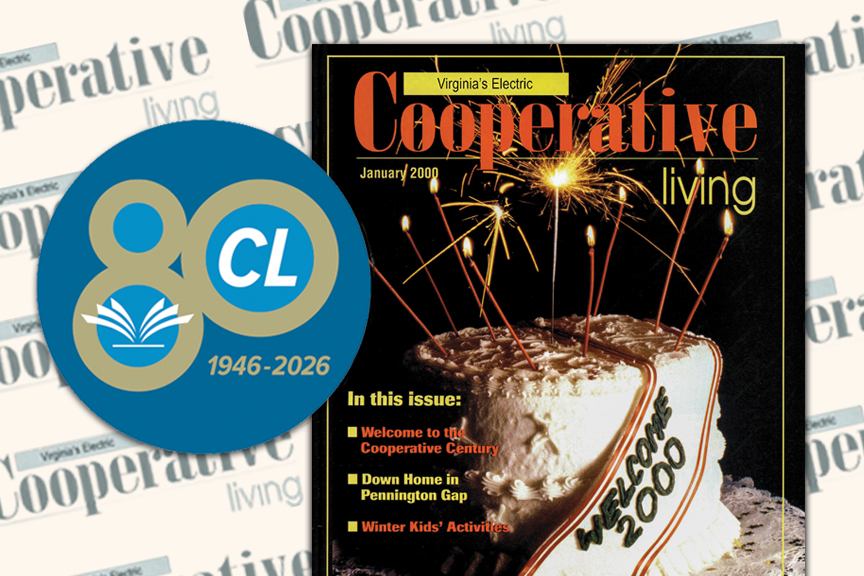
Rural Living officially became Cooperative Living in January 2000. The magazine also launched its first website as electric cooperatives nationwide continued delivering power to 26 million Americans.
Throughout 2000, The Cooperative Century series explored a variety of businesses and organizations built around cooperative principles.
In 2001, Cooperative Living expanded its content. New features debuted: the Rural Living column and the WhatzIt photo contest.
A NATION CHANGED
The Sept. 11, 2001, terrorist attacks deeply impacted the nation and the magazine’s readers. In October 2001, Editor Richard G. Johnstone Jr. reflected on a country forever altered by the terrorist attacks, writing about grief, resilience and the unity that emerged in the aftermath. Americans, he observed, rallied together with passion and shared purpose.
A patriotic “God Bless America” editorial appeared alongside the November/December 2001 cover story, “A Window on Tragedy.” The cover story recounted the experience of electric cooperative executives who were meeting near the World Trade Center when American Airlines Flight 11 struck the north tower. Amid confusion and fear, the group safely evacuated, relying on cooperation and quick thinking to survive. The article reminded readers of life’s fragility and the enduring strength of cooperation.
BEYOND ENERGY
While keeping readers abreast of intense energy debates, Cooperative Living remained focused on telling the stories of the people cooperatives served. The March/April 2002 Fairs & Festivals Guide celebrated everything from peanuts and pork to antique cars and music festivals throughout Virginia.
In January 2003, Cooperative Living warned readers about the potential consequences of electric deregulation and retail choice, openly questioning whether deregulation would truly benefit rural Virginians. The Youth Art Contest also debuted in 2003, with winners announced in the July issue. That same issue featured the inaugural Gaff-n-Go Rodeo, hosted by Central Virginia Electric Cooperative in Nelson County, Va.
In October 2003, the magazine covered both the Northeast blackout and Hurricane Isabel’s destruction across Virginia. Nearly 230,000 electric cooperative members lost power, and utility crews from across the country traveled to Virginia to assist with restoration efforts.
By January 2004, editorials argued Virginia’s experiment with electric deregulation had failed to deliver benefits for many consumers, especially those in rural areas.
The February 2004 issue recounted the emotional reunion between a mother and the infant son she had given up for adoption years earlier. Later that year, “Virginia’s Delightful Dozen,” invited readers to vote for their favorite places, people and attractions across the state.
The November/December 2004 issue featured BARC Electric Cooperative board member and World War II veteran Jim Tennant, who had survived a near-fatal plane crash over France in 1944, evaded German capture and eventually made his way back to Allied lines.

Kenny Alphin of Big & Rich
MUSIC AND MILESTONES
The February 2005 issue featured Big & Rich member Kenny Alphin, whose parents were members of Rappahannock Electric Cooperative.
Legendary bluegrass musician Ralph Stanley appeared on the September 2005 cover. The magazine described Stanley as the quintessential Virginia gentleman, praising the endurance, faith and timelessness reflected in both the man and his incomparable music.
In October 2005, Cooperative Living reported on the signing of the Energy Policy Act of 2005, which boosted oil, natural gas and electricity supplies while promoting alternative energy sources. In that same issue, it was reported that electric cooperative crews from Virginia, Maryland and Delaware traveled south to help restore power along the Gulf Coast in the wake of Hurricane Katrina.
SIXTY YEARS
Cooperative Living celebrated its 60th anniversary in January 2006. The commemorative issue reflected on extraordinary change, from rural electrification to the internet age, and recognized that the publication remained focused on educating members about important co-op issues while spotlighting the people and places served by electric cooperatives.
WhatzIt answers: A. Horseshoe game shoe end B. Antique die tool C. Part from Erector set