
Made of a merger, co-op marks 90 years strong
June 2026

“When those early organizers went town to town and house to house, they were building more than power lines — they were building a promise that rural communities would not be left behind. In today’s more complex and challenging energy market, that same responsibility still drives REC: to protect reliability, safeguard affordability and make decisions that put members first.”
— John D. Hewa, CEO and President, REC
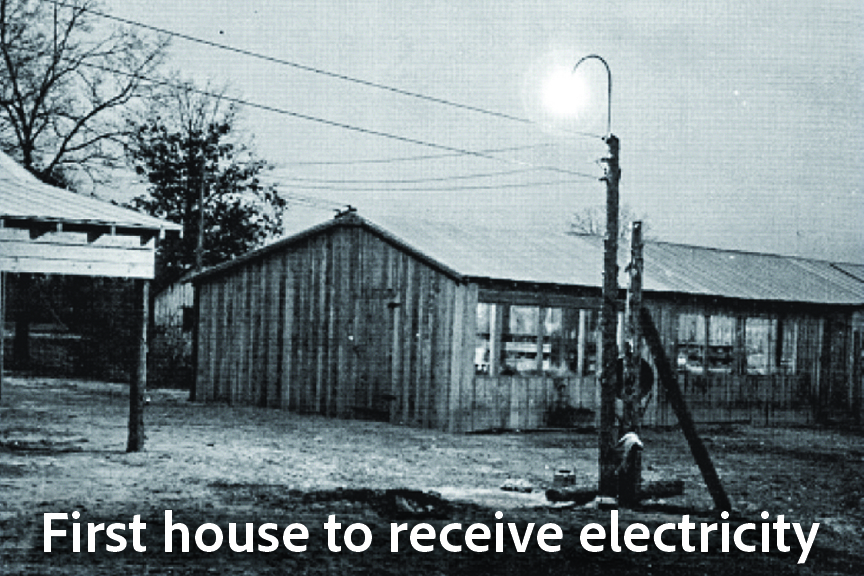
In 1934, less than 8% of Virginia farms had electricity. In 1935, Dr. J.R. Travis and Francis Pitts traveled Virginia’s back roads, meeting with farmers, business owners and local families to build support for what became Farmers Rural Utilities.
Their work reflected a principle that still defines electric cooperatives today: When communities are overlooked, the cooperative model can provide a practical, lasting solution.
President Franklin D. Roosevelt created the Rural Electrification Administration in 1935, and Congress followed with the Rural Electrification Act in 1936, giving rural communities access to financing for electric systems of their own.
“Electricity is a modern necessity of life, not a luxury,” Roosevelt said during an Aug. 11, 1938, address at Barnesville, Ga., dedicating an REA project. He argued that it should reach “every village, every home and every farm.” That vision helped reshape rural America and gave local leaders the tools they needed to turn persistence and local support into poles, wire and service.
Farmers Rural Utilities energized the first REA-financed line in Virginia — and on the East Coast — in August 1936. After Virginia adopted enabling legislation for cooperatives in 1938, Farmers Rural Utilities became Virginia Electric Cooperative, headquartered in Bowling Green. Soon after, Northern Piedmont Electric Cooperative began extending service in Culpeper and Madison counties in 1939. Those efforts brought electric service to people who otherwise might have waited years for it, through a member-owned model organized around service, reliability and affordability rather than profit. By 1950, more than 90% of Virginia farms had electricity.
By the 1970s, however, the energy landscape had become more difficult. Costs were rising, the industry was under pressure and scale mattered more than ever. Studies found that consolidation would reduce duplication, improve efficiency and strengthen long-term service. On Jan. 1, 1980, the two cooperatives officially merged to become Rappahannock Electric Cooperative.
REC, a not-for-profit, member-owned electric distribution cooperative, was governed by the people it served and focused on providing service as cost-effectively as possible. In 2010, REC entered another defining chapter, when it acquired part of Allegheny Energy’s service territory. The acquisition added members across 12 northwestern Virginia counties and increased connections from 103,000 to 154,000.
Today, REC serves more than 185,000 connections across 22 Virginia counties and maintains more than 18,000 miles of power lines, and it ranks second nationally among cooperatives for miles of line and 12th for number of connections served. That growth is likely far beyond what the early organizers could have imagined, but the mission is the same.
Where other business models may answer first to profits, REC’s responsibility is directly to the people and places it serves.
For more information, visit myrec.coop.