
Celebrating the fifth decade of Cooperative Living
June 2026
by Laura Emery, Staff Writer
In celebration of Cooperative Living magazine’s 80th anniversary, each issue this year will spotlight one of the eight decades since this publication — first published in October 1946 — began inspiring, informing and connecting electric cooperative members.
During the magazine’s fifth decade, from 1986 to 1996, rural America continued to transform. Farms remained central, but new industries emerged. Energy policy debates in Washington, D.C., also started to ripple across cooperative territory. Rural Living — as Cooperative Living was then known — helped readers understand change while celebrating traditions that defined rural life.
In February 1986, Halley’s Comet swept past Earth — a once-in-a-lifetime sight for most readers.
By March 1986, the magazine reported that a national survey found cooperative communities increasingly included retirees and blue-collar workers rather than farmers or ranchers.

ENERGY IN FOCUS
Energy policy discussions in Washington, D.C., were beginning to affect cooperatives and their members directly. The Reagan administration’s plan to privatize power marketing raised concerns about increased bulk power costs for electricity generated at federal hydropower stations. Discussions about “wheeling rights” — the ability to transmit power across another utility’s lines — became increasingly important as the electric grid evolved.
Energy remained a focus throughout the decade, and volatile oil prices spurred a search for alternative energy sources.
TECHNOLOGY MEETS TRANSITION
Technology continued to reshape daily routines. In February 1987, a columnist described learning to use a microwave oven with cautious optimism. “I’m still finding my way,” he wrote, capturing the tone of the moment as people adapted to change at their own pace.
Environmental awareness gained momentum. Coverage throughout 1987 highlighted new federal clean-air standards to reduce harmful pollutants.
In August 1987, the magazine reported gasoline averaged about $1 per gallon, farmland prices had dropped sharply in the preceding years and industries across the country were adjusting to new environmental requirements tied to cleaner air. That same year, nuclear energy continued to expand, as the U.S. added five new commercial nuclear power plants. The total number of nuclear plants grew to 108, supplying about 17% of U.S. electricity.
PEOPLE AND PLACES
While covering national policy and energy developments, Rural Living never lost sight of the people at the heart of it all. In 1987, the magazine began featuring multiple co-op member profiles in each issue, presented as “a visit” with some of the people who make their communities better. From artists, craftsmen and educators to lineworkers, farmers and small-business owners, the magazine brought their stories into readers’ homes.
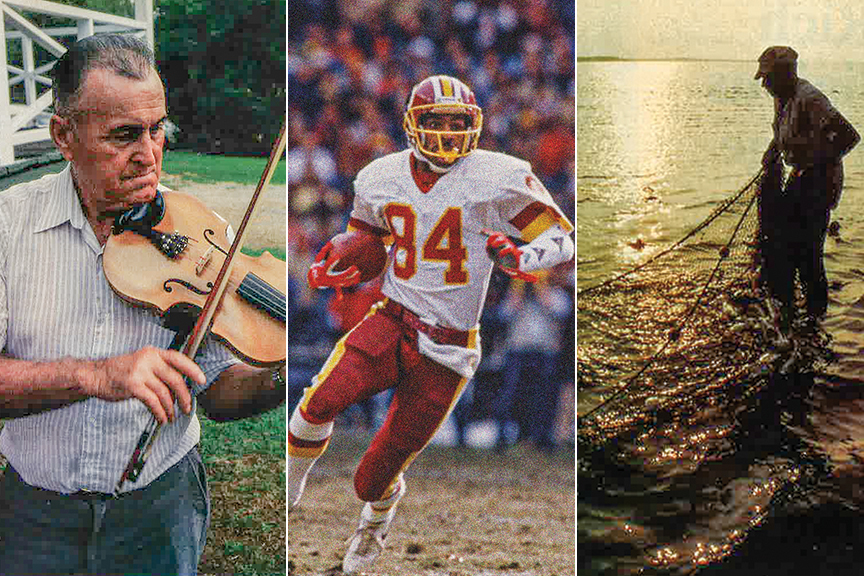
Travel features encouraged readers to explore destinations across the region. The October 1987 issue focused on the Eastern Shore, highlighting barrier islands known for wild ponies, working waterfronts and coastal traditions. The issue also explored the history of decoy carving and highlighted A&N Electric Cooperative lineworkers serving Tangier and Smith islands.
In 1988, Rural Living circulation had reached 250,000, making it the largest subscription magazine in Virginia.
The January 1988 issue focused on Radford native Gary Clark, whose NFL career was gaining momentum. He later became a four-time Pro Bowl selection and helped lead the Washington Redskins to two Super Bowl championships.
In the May 1989 issue, John Cephas of Bowling Green, Va., was featured for his fingerstyle guitar rooted in Piedmont blues traditions. Before his death in 2009, he received a National Heritage Fellowship and, with Phil Wiggins, earned prestigious blues awards and helped preserve a regional musical legacy.
Rural Living readers met Rockbridge County’s Rick Mast in August 1989, who went on to compete for 15 seasons in NASCAR’s top series and record dozens of top-10 finishes.
The October 1989 issue paired global and local themes, covering both cooperative efforts to help impoverished families in Central America and the Boy Scouts of America National Jamboree at Fort A.P. Hill.
SERVICE AND STRENGTH
Also in October 1989, Virginia Power joined Old Dominion Electric Cooperative to develop plans for a coal-fired generating plant in Halifax County. Over the next 16 months, the magazine invited readers to follow the Clover Power Station from early planning through permitting and construction. By the time the plant entered service — Unit 1 in 1995 and Unit 2 in 1996 — readers understood the role it would play in strengthening the region’s electric infrastructure for the future.
Just weeks earlier, that infrastructure had been tested. Hurricane Hugo ripped across the Carolinas, leaving extensive property damage and knocking out electric service across the region. Rural Living reported that 14 of the region’s electric cooperatives dispatched more than 150 lineworkers to assist restoration efforts.
After the Berlin Wall fell in late 1989, editor Richard Johnstone Jr. reflected in the January 1990 issue that “even the most hard-bitten cynics” should now recognize that “miracles do happen.” That same issue marked the debut of the publication’s Virginia Legislative Guide, which helped strengthen readers’ connection to policymakers.
The October 1991 issue highlighted the growing leadership role of women in electric cooperatives and featured board members from several Virginia cooperatives, including Rappahannock Electric Cooperative’s Darlene Carpenter, Northern Neck Electric Cooperative’s Elnora Tompkins and Southside Electric Cooperative’s Lillian Hicks.
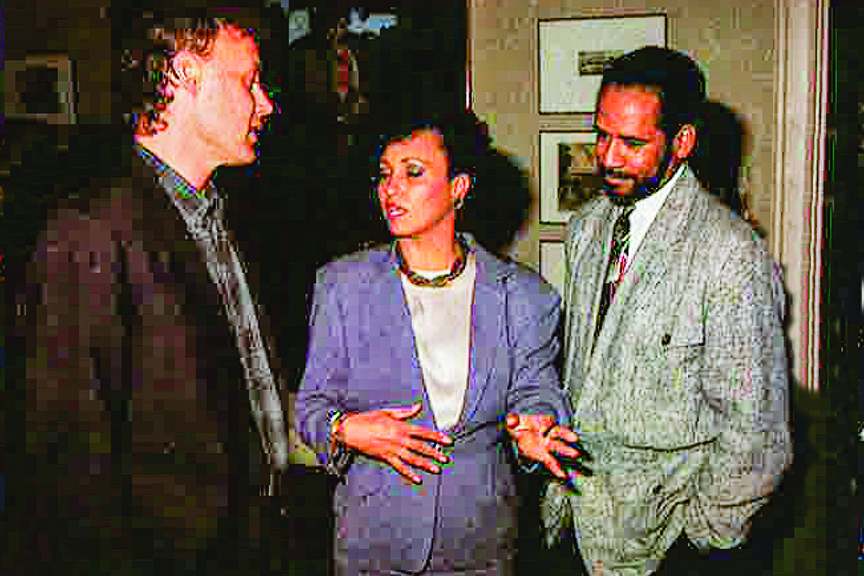
From left, musician Bruce Hornsby, Daphne Maxwell Reid and Tim Reid
FAMOUS FACES AND FORECASTS
Rural Living’s January 1992 cover featured legendary actor Charlton Heston as part of a story on Virginia’s growing role in film and television production. Virginia native Tim Reid of “WKRP in Cincinnati” was also photographed at the Virginia Festival of American Film and later appeared again in Cooperative Living.
In 1993, the Northern Virginia edition was retitled Current Living as the area’s demographics became more suburban than rural.
An article in May 1993 imagined the future of household technology 20 years later, predicting homes assisted by robots cooking meals, mowing lawns, organizing closets and monitoring security.

CELEBRATING MILESTONES
In November 1994, the magazine introduced the Say Cheese column featuring reader-submitted photographs of everyday life across cooperative communities.
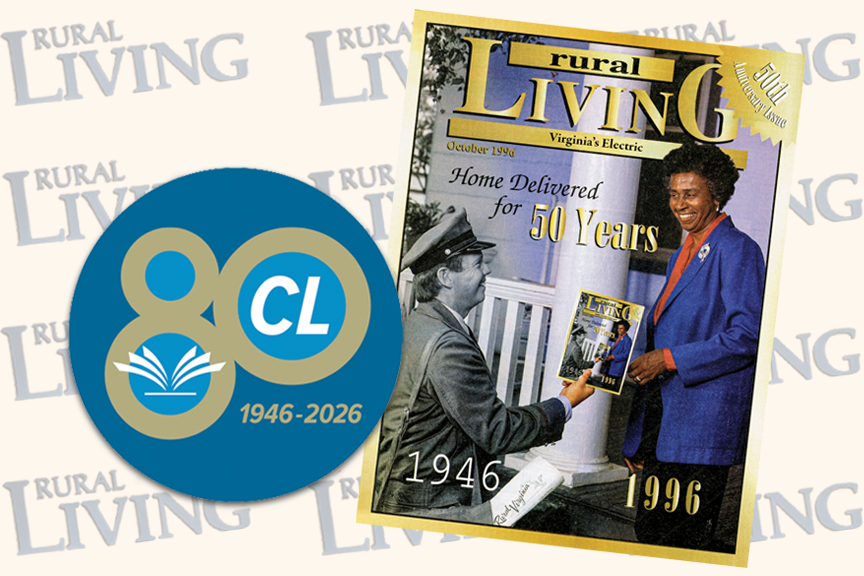
Rural Living celebrated its 50th anniversary in 1996, reflecting on milestones that included the first color cover in 1956, the change from tabloid to magazine format in 1960, introduction of local pages in 1967, the transition from Rural Virginia to Rural Living in 1970 and the first 40-page issue in 1985. Rural Living had grown into one of the region’s most widely read magazines.
Through years of change, one idea continued to guide the magazine’s mission: Electric co-ops belong to the people they serve. It’s a message that defined the publication’s fifth decade and still shapes Cooperative Living today.
