
Interesting place names reveal stories shaped by landscape, history and local lore
May 2026
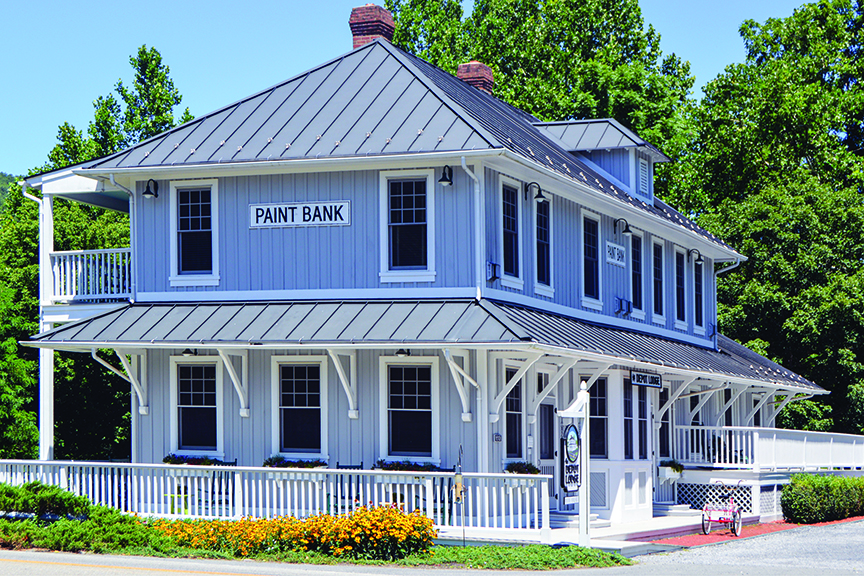
Paint Bank is an unincorporated community in northern Craig County, Va. Its former train station now serves as a lodge.
by Laura Emery, Staff Writer
Sometimes, all it takes is a unique name to put a place on the map. A town tucked quietly along a back road, miles from the nearest highway, can suddenly feel worth the drive when its name sparks curiosity in a traveler willing to chase a little adventure. Whether it hints at folklore, history or a touch of humor, a memorable name can turn even the most off-the-beaten-path community into a destination — if only for the story you get to tell afterward.
Across the regions of Virginia and Maryland served by electric cooperatives, there’s no shortage of interesting place. names that invite a closer look.
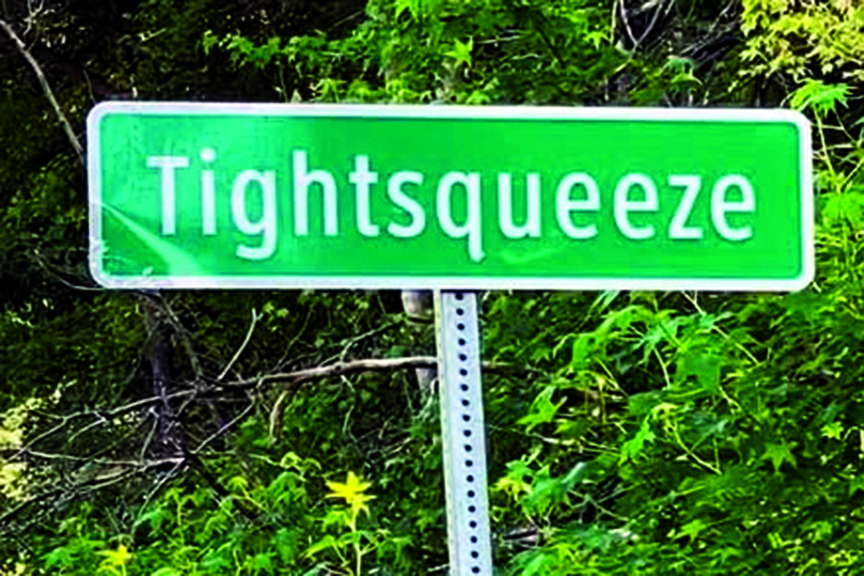
TIGHTSQUEEZE
Pittsylvania County, Va.
Served by Mecklenburg Electric Cooperative
The origin of the community of Tightsqueeze’s name is believed to trace back to the 19th century, when two businesses built unusually close to the road connecting Chatham and Danville. In 1870, W. H. Colbert opened a general store close enough to the roadside that women traveling in carriages could step inside without dirtying their dresses. Not long after, merchant Isaiah Giles built a blacksmith and wheelwright shop directly across the street, placing it just as close to the edge of the road. With the two buildings facing each other, passing wagons and buggies had to slow to a crawl — it was, quite literally, a tight squeeze.
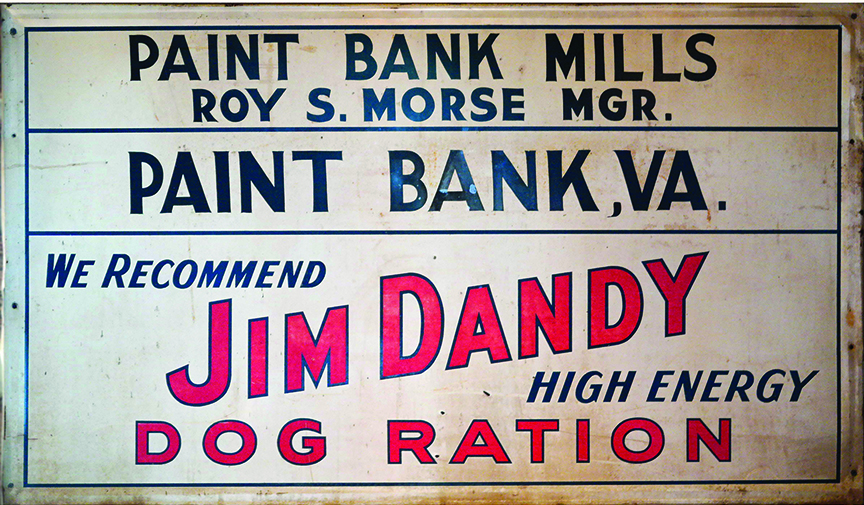
PAINT BANK
Craig County, Va.
Served by Craig-Botetourt Electric Cooperative
Nestled between Potts Mountain and Peters Mountain in northern Craig County, the unincorporated community of Paint Bank takes its name from the land itself. Iron ocher and red clay along Potts Creek were once used by Native Americans, including the Cherokees, as war paint and pottery pigment. The name Paint Bank serves as a reminder that the landscape itself helped color the region’s earliest stories.
DISPUTANTA
Prince George County, Va.
Served by Prince George Electric Cooperative
Established in 1853, the unincorporated town of Disputanta, located in Prince George County, owes its unusual name to a disagreement between railroad builder William Mahone and his wife, Otelia. While naming stops along the Norfolk and Petersburg Railroad in the mid-1800s, Otelia drew inspiration from Sir Walter Scott’s “Ivanhoe” — including Windsor and Waverly. But the couple couldn’t agree on one station’s name. According to local lore, the couple ended up calling it Disputanta as a lasting reminder of the dispute.
CUCKOO
Louisa County, Va.
Served by Rappahannock Electric Cooperative
The community of Cuckoo in Louisa County, Va., is believed to take its name from the nearby Cuckoo Tavern, a notable landmark during the Revolutionary War. In 1781, the tavern was the starting point of Virginia militia captain Jack Jouett’s midnight ride to warn leaders of the approaching British cavalry. According to local accounts, the tavern itself was named for a cuckoo clock that hung on one of its walls — reportedly among the first of its kind in Virginia.
FROG LEVEL
Tazewell County, Va.
At the junction of U.S. Business Routes 19 and 460 and Virginia Route 91 in Tazewell County, Va., sits Frog Level, a name as playful as it is memorable. (It is one of two Virginia localities bearing the name. The other Frog Level is in Caroline County, Va.)
Local lore credits the name to a 1933 fishing trip, when schoolteacher Jack Witten was astonished by the chorus of croaking frogs along Plum Creek and suggested the name. He then popularized the name through his “Frog Level News” column in local newspapers.
Historically, the area around Frog Level was part of the early frontier settlement in the upper Clinch River Valley, marked by conflicts between Native Americans and European colonists during Dunmore’s War in 1774 and the Revolutionary War from 1775 to 1783. A historical marker on Crab Orchard Road near Frog Level commemorates these historical events.
LICK SKILLET
Smyth County, Va.
Situated in the southwestern part of Virginia, Lick Skillet’s origin varies. Some say Lick Skillet got its unusual name from the shape of the roads in and around the area, which were said to resemble a skillet, or cooking pan, when viewed on a map.
Others point to more practical, down-to-earth origins. The name may allude to the steep, challenging inclines that caused traveling wagons to slip and struggle in the 19th century, requiring drivers to “lick,” or coax, their teams forward.
Another popular account ties the name to natural salt deposits discovered by early settlers, where local livestock and wildlife would lick the mineral-rich ground bare, leaving patches that looked like a “licked-clean” skillet. The name also fits the region’s history, as it is located near Saltville, long known for its historic salt production.
Whatever the true origin, there may be just a lick of truth in all of them.
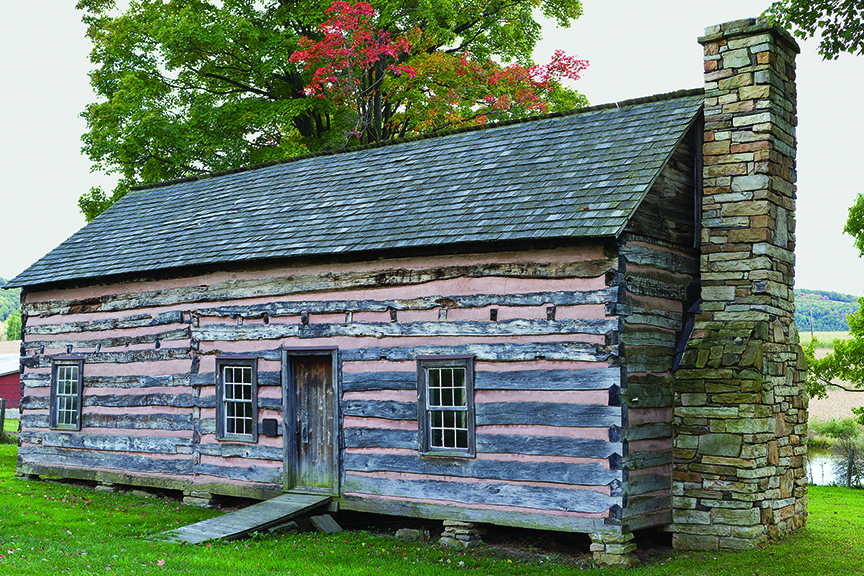
Constructed in 1798, the Drane House belonged to the first permanent settler in the Accident area. (Courtesy of Creative Commons)
ACCIDENT
Garrett County, Md.
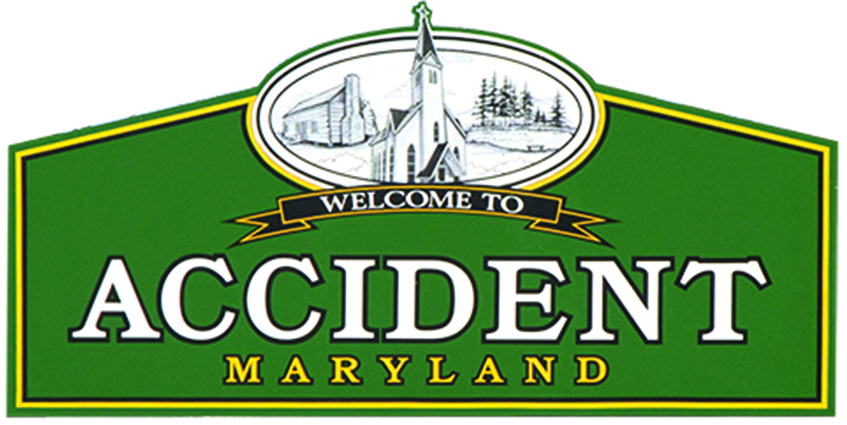 No, you’re not more likely to get into a vehicle accident in this Garrett County, Md., town — but the town of Accident did get its name from a happy one. According to AppalachianHistory.net, the story dates to the 1750s, when settler George Deakins was granted 600 acres of land as payment for a debt from England’s King George III. Deakins sent out two independent survey crews to mark out a tract of the best land in the area. Both crews selected the same oak tree as their starting point. Delighted by this “happy accident,” Deakins named it “The Accident Tract.”
GOOSE PIMPLE JUNCTION
Washington County, Va.
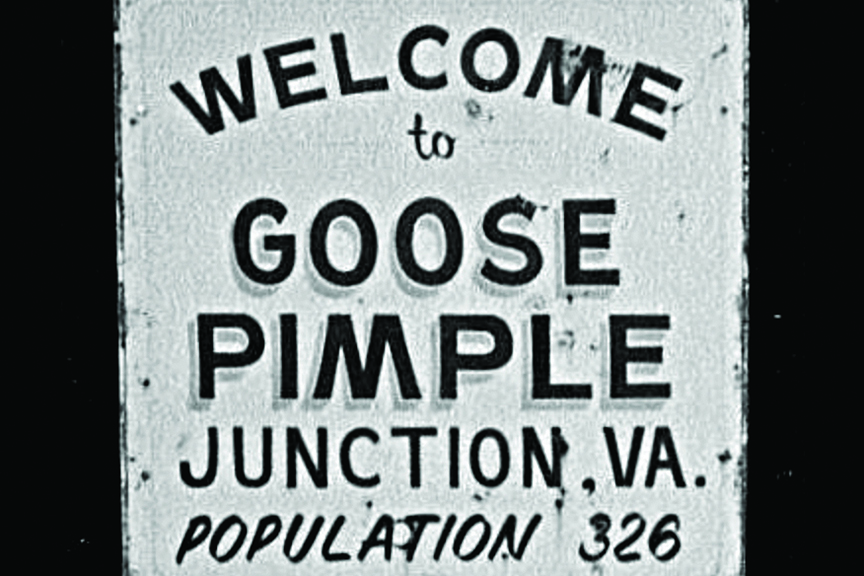
Goose Pimple Junction in Washington County, Va., was recognized by the U.S. Geological Survey in 1974. According to local lore, the name stems from a couple who lived in the small, rural crossroads community and were known for their loud, frequent arguments. One neighbor, after hearing an especially heated exchange, allegedly jumped up with a shudder, saying, “Those two give me goose pimples!”
DEAL ISLAND
Somerset County, Md.
In western Somerset County, Deal Island was once known as Devil’s Island, a marshy refuge for pirates and outlaws until a surprise militia raid in 1783 helped turn the tide, according to environmental journalist Tom Pelton. Soon after, a wave of Methodist influence reshaped the place’s identity — led in large part by Methodist evangelist Joshua Thomas. The three-mile-long island earned historic district status on the National Register of Historic Places in 2006 — a fitting milestone for a place that’s come a long way from its swashbuckling beginnings.