
Celebrating the third decade of Cooperative Living
April 2026
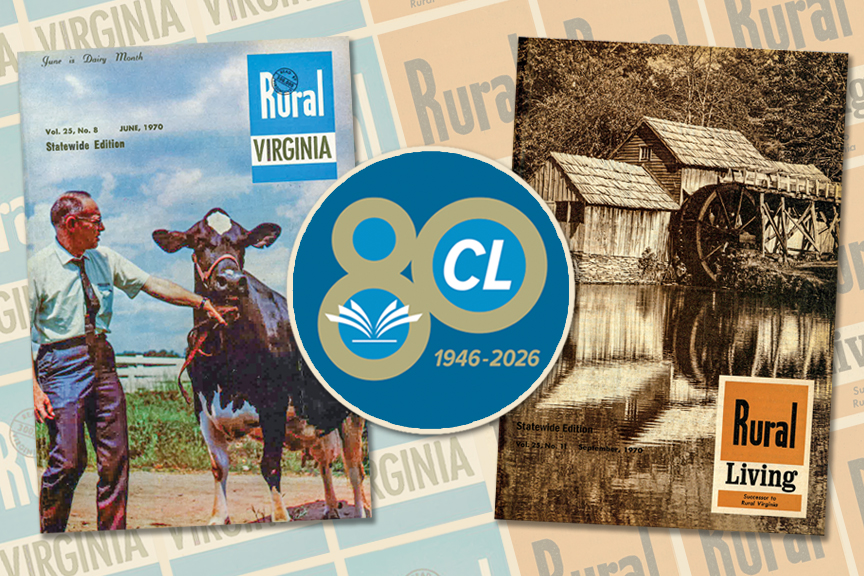
Rural Virginia published its first color cover photo in June 1970. That fall, the publication changed its name to Rural Living.
by Laura Emery, Staff Writer
In celebration of Cooperative Living magazine’s 80th anniversary, each issue this year will spotlight one of the eight decades since this publication — first introduced in October 1946 — began inspiring, informing and connecting electric cooperative members.
By the mid-1960s, Rural Virginia — the original title of this magazine — had settled into its stride. The publication’s third decade, 1966 to 1976, unfolded against the backdrop of a nation in flux — a period defined by the Vietnam War, civil rights struggles, social protest and cultural transformation. While mindful of the national climate, the publication stayed true to its mission, offering uplifting, community-centered content that celebrated rural Virginia and the transformation of everyday life through electricity.
In the January 1966 issue, readers enjoyed a lighthearted feature on a young Richmond banker named James Bond. With “Thunderball” playing in theaters across the country at the time, the real-life Bond recounted the benefits and disadvantages of sharing a name with a fictional secret agent — and the humor behind working with a colleague at the bank named Charlie Brown.
In the summer of 1966, Virginia youth had “a rollicking good time” while on the Rural Electric Youth Tour, where they met President Lyndon B. Johnson, first lady Claudia “Lady Bird” Johnson and their youngest daughter, Luci. The president praised rural electrification and challenged the students to “bring the light of education, abundance and goodwill to all the dark places in the world.”
Throughout 1966, the magazine acknowledged a nation marked by the realities of war. In July, Rural Virginia encouraged young readers to write letters of support to soldiers serving in Vietnam. “Start your letter with ‘Dear G.I. Joe,’” the editor suggested.
While the nation grappled with global conflict, electric cooperatives continued expanding service and developing a strong presence in rural communities. In August 1966, Virginia’s 16 electric cooperatives were serving about 120,000 member-consumers across more than 27,000 miles of line. What began as an experiment was now an established, growing network.
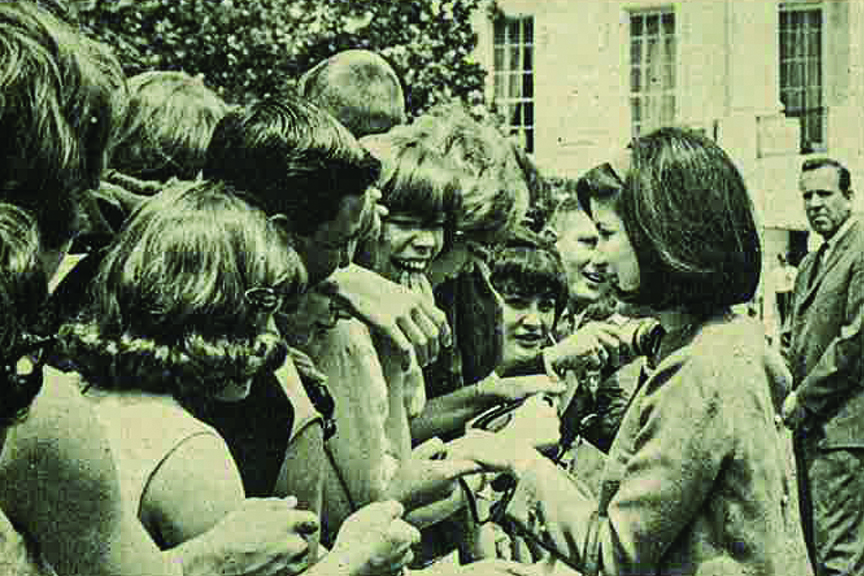
Luci Baines Johnson
POWERING DAILY LIFE
In January 1967, the words of Oneida Berry of Accomac, Va., underscored what statistics alone could not convey — that electricity was more than just a service. It reshaped daily routines, eased physical labor and brought a quality of life that rural families had never known.
Her poem, submitted to Rural Virginia, celebrated rural electrification. “No more chipping wood for the old black cooking range. Electricity heats my new white one without wood or flame. No more rubbing on the old wash board to get clothes clean. Now my wash is done while electricity runs my washing machine,” reads a portion of her poem that concludes with the sentiment that electricity makes farm life “a dream.”
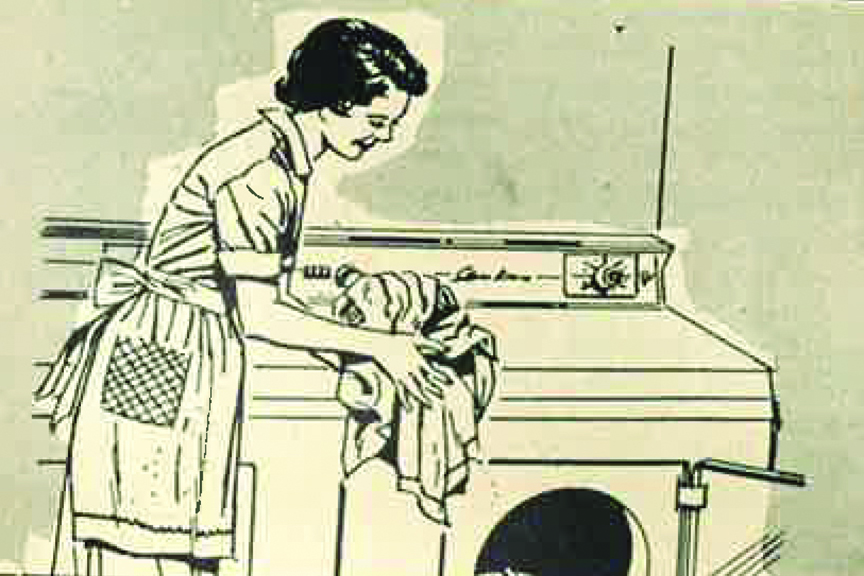
Electricity and electrical appliances reshaped daily routines, eased physical labor and brought a quality of life that rural families had never known.
GLOBAL INFLUENCE
As electric cooperatives became increasingly successful in Virginia, their influence extended abroad. The cooperative model, born out of rural necessity, was now part of a global conversation. Through a nonprofit agreement between the National Rural Electric Cooperative Association and the Agency for International Development, rural electrification projects were underway in South Vietnam. In June 1967, part of Rural Virginia’s coverage of electric cooperatives in South Vietnam was entered into the Congressional Record by U.S. Sen. Harry F. Byrd Jr. — a first for the magazine.
The founding cooperative principle of Concern for Community took on a new meaning in Jonesville, Va., in August 1967. Powell Valley Electric Cooperative Crew Leader Joe Sutton revived a 5-year-old boy using mouth-to-mouth resuscitation — a technique learned during regular co-op safety training — after the child was discovered floating unconscious in a pool.
REACHING FOR THE MOON
By September 1967, the publication’s attention turned skyward. An article titled “Moon-Struck” imagined astronauts orbiting and landing on the moon “in 1970, or thereabouts.” The article was noting the role of Virginia scientists at Langley Research Center in preparation for the historic mission. “When astronauts do land on the moon,” the article read, “Langley people could claim they were there first, in spirit and in simulators.”
Just two years later, on July 20, 1969, that vision became reality as Neil Armstrong and Buzz Aldrin walked on the lunar surface while Michael Collins orbited above.
By the late 1960s, nearly 20 million American families shared ownership in cooperatives nationwide. As the magazine noted, cooperation continued to drive dependable service and shared progress. “Members of the 990 rural electric cooperatives financed by REA are familiar with the underlying principle of cooperation — that 5.7 million people, united in seeking the same goal, can achieve what they could not achieve by themselves,” a 1967 article read.
In November 1967, members of Chesapeake Islands Electric Cooperative — serving Tangier Island in Virginia and Smith Island in Maryland — voted to merge with Accomac-Northampton Electric Cooperative.
In April 1968, Rural Virginia published the results of its first readership survey, offering insight into who was turning its pages. That same year, articles explored the introduction of dimmer switches and early development of electric cars despite popular opinion at the time that the concept “would never stick.”
In October 1969, electric cooperative employees were once again credited with saving a life — this time by Northern Piedmont Electric Cooperative (now Rappahannock Electric Cooperative) lineworkers. A woman sunbathing near a lake noticed her unattended vehicle begin rolling downhill toward the water. She attempted to stop the runaway vehicle, but it struck her and dragged her into the lake. An electric cooperative line crew traveling through the area spotted her and pulled her to safety.

Fashion of 1969
A NEW ERA
The first color photograph appeared on the cover of Rural Virginia in June 1970. In honor of National Dairy Month, it featured a man standing with one of the “finest Holsteins in the nation.”
Growing international interest in rural electrification and the cooperative business model brought distinguished guests to Prince William Electric Cooperative (now Northern Virginia Electric Cooperative) in September that year. The guests were Imelda Marcos, wife of Philippine President Ferdinand Marcos, and first lady Pat Nixon, wife of U.S. President Richard Nixon.
Also in September 1970, Rural Virginia changed its name to Rural Living after welcoming Choptank Electric Cooperative’s 17,000 consumers to its distribution list. In June 1973, Choptank Electric Cooperative hosted a group of international trainees from Thailand, Guatemala and the Philippines as part of the Agency for International Development program. The initiative’s focus was on firsthand observation of the functioning and operation of electric cooperatives. By 1975, wholesale power and fuel adjustments, as well as dwindling fossil fuel supplies, pushed electric bills higher, prompting Rural Living headlines such as “Why Bills Are Higher,” “Difficult Times,” “The Crisis is Real” and “Fuel Adjustment Bug-a-boo.”
As the publication’s third decade ended, the pages of Rural Living served as evidence that cooperation leads to progress — and that there is enduring strength in the cooperative spirit.
