
Celebrating the second decade of Cooperative Living
March 2026
by Laura Emery, Staff Writer
In celebration of Cooperative Living magazine’s 80th anniversary, each issue this year will spotlight one of the eight decades since this publication — first introduced in October 1946 — began inspiring, informing and connecting electric cooperative members.
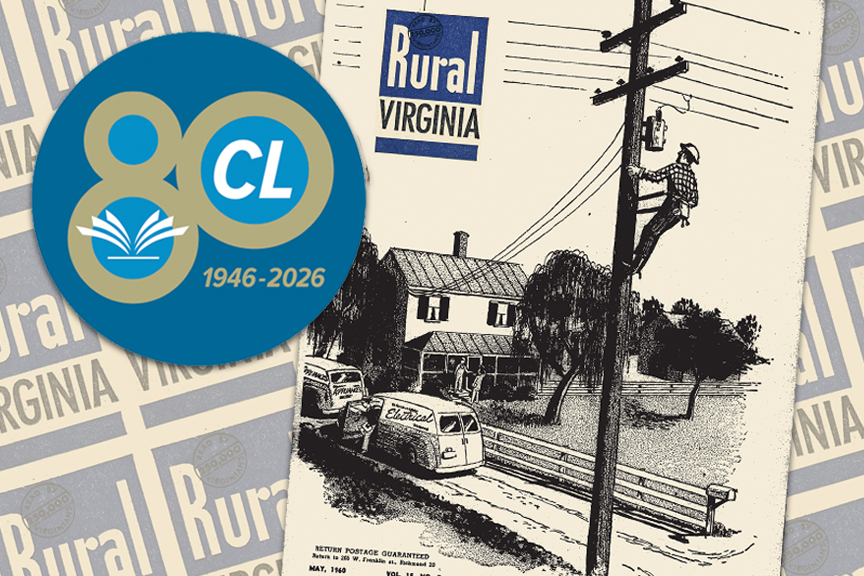
The second decade of Cooperative Living (then called Rural Virginia), spanning 1956 to 1966, reflected a noticeable shift from its early years. While the publication continued to educate and inform electric cooperative members, familiar reader-driven features began to fade. There were no more letters to the editor or poems, and the beloved “Pa and Ma” and “Lonesome Corner” columns were discontinued.
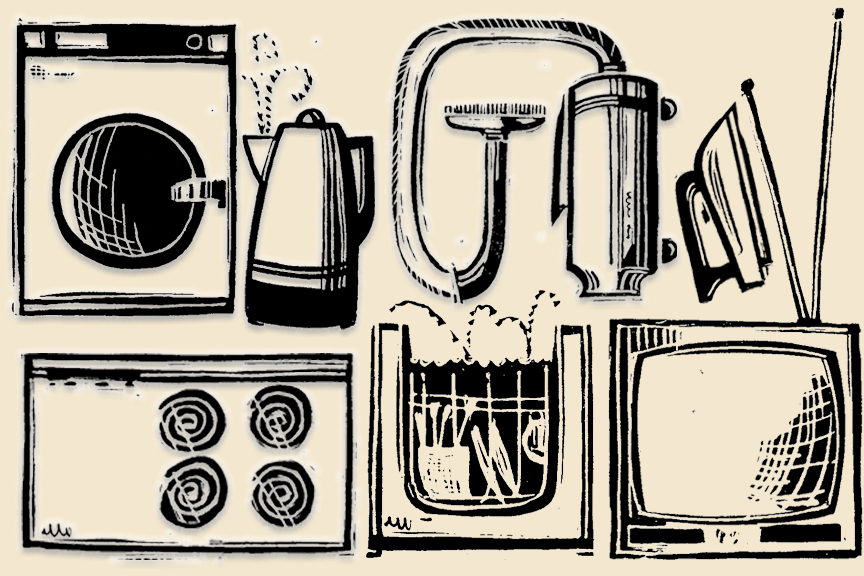
The publication had multiple editors during its second decade: Alexander Hudgins, Bevin Alexander and Fletcher Cox Jr. Under the direction of these editors, Rural Virginia focused heavily on household efficiency, electrical safety, industry news and the expanding role of electricity in daily life.
The pages of Rural Virginia reflected domestic life in the 1950s with 35-cent sewing patterns available for doilies, dust ruffles, whirly dresses, and bedspread and curtain ensembles.
Advice columns on household matters offered guidance ranging from practical to particular. A February 1956 article encouraged homemakers to keep tidy homes by emptying and washing ash trays, arranging books according to their size and/or color, and remembering to “pat up” the sofa cushions to keep them looking nice.
“Household Hints” remained a staple in the publication, with handy tips and tricks — like putting broken bits of peppermint inside of apples before baking in order to enhance the flavor, or adding a tablespoon of butter to boiling water to prevent pasta from sticking and boiling over. Recipes from the era ranged from spiced milk, golden broccoli and orange scones to berry cakes, cheese rings and mustard wax beans.
In the late 1950s, Rural Virginia introduced “The Power of Electricity,” a sobering column recounting real-life electrical accidents. The column underscored the dangers of electricity and the importance of safe use. One of the columns noted that all the tragedies shared one common denominator: “The people involved looked with careless disregard upon electricity, which — like flame and water, man’s other allies of power and force — must always be treated with respect.”
Readers were also introduced to three-prong plugs to help prevent electric shock, a concept still unfamiliar to many households at the time.
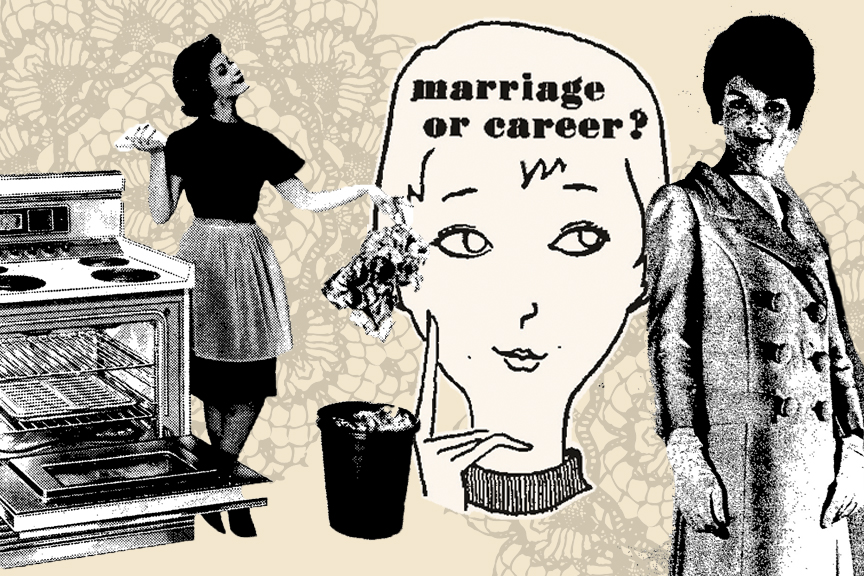
Social change also made its way into the publication’s pages. In February 1956, an advertisement urged women to stop viewing marriage and careers as mutually exclusive, citing statistics revealing that two-thirds of working women at the time were also married.
Fashion trends were covered. In February 1958, a column announced that shorter pleated skirts would be in style. Embroidery took center stage, with small prints dominating women’s clothing design. Necklines were also moving further away from the neck, introducing a softer, more relaxed silhouette for women.
IN THE NEWS
Rural Virginia chronicled noteworthy events across rural communities. In April 1956, a fashion show was held on Virginia’s Eastern Shore. It blended style with technology, showing spring fashions in clothing — and electric cooking. The show, sponsored by Accomack-Northampton Electric Cooperative (now A&N Electric Cooperative), consisted of local models flaunting fashionable clothing while doing cooking demonstrations. General Electric Company, as GE was known then, wowed the crowd featuring turquoise and pink electric ranges with push-button convenience. In 1957, Prince William Electric Cooperative (now Northern Virginia Electric Cooperative) in Manassas, Va., was enjoying record-breaking member participation. In June that year, more than 2,300 people flocked to its 16th annual meeting. That same year, the cooperative hosted international power leaders from Yugoslavia and Russia — drawing widespread attention and highlighting global interest in the success of the rural electrification model.
In June 1957, the publication reported a record-breaking catch on the Eastern Shore. Fisherman James Lee Johnson, a member of Accomack-Northampton Electric Cooperative (now A&N Electric Cooperative), landed a world-record black drum off Smith Island that weighed just over 94 pounds. In March 1958, Rural Virginia profiled a 19-year-old beauty pageant star. After entering a Craig-Botetourt Electric Cooperative beauty contest, Jayne Garman was launched into the pageantry world and went on to win six beauty contests and appear on the cover of Home Builders Association magazine.
In October 1958, an all-electric home in Pendleton, Va., was featured. Served by Virginia Electric Cooperative (now Rappahannock Electric Cooperative) in Bowling Green, Va., it was considered “one of the most spectacular all-electric homes in Virginia.”
In January 1959, Rural Virginia featured C.T. Park, a Mecklenburg Electric Cooperative member determined to keep the “almost unheard-of ” occupation of molasses making alive. While the world embraced modern conveniences made possible with electricity, Park stood over boiling
vats of cane juice, stirring, skimming and coaxing it to thicken into a dark, rich syrup. He produced 150 gallons of molasses from each acre of cane he hand planted.
In 1959, a Northern Neck Electric Cooperative member, John Courtney, became known as “The Northern Neck Egg Man” after his egg business became successful. His laying house in Northumberland County accommodated 1,080 cages.
COOPERATION SAVES THE DAY
Rooted in its founding principles, cooperation remained central to the electric cooperative movement. In April 1958, after a massive snowstorm crippled many electric co-ops, the publication highlighted the coordinated response, praising neighbor co-ops for working together to restore service and support affected communities.
The article read, “The greatest plaudits go to the unsung heroes of the service crews who endured the hardships of raw, wet weather and long, tiring hours without sleep to bring electric power to those who were plunged into darkness and cold when power wires were downed by the storm.”
In 1958, the earliest version of the Cooperative Living Fairs & Festivals Guide appeared, with over 31 fairs and festivals listed for readers. Letters to the editor returned to the pages of Rural Virginia, back by popular demand. A book review column was also introduced in 1958. In 1960, Rural Virginia switched to a magazine format.
A SIGN OF THE TIMES
The evolving attitude toward the role of women in society was evident within the pages of Rural Virginia. Its early content reflected traditional views of women as caretakers of the home. By the end of its second decade, those portrayals began to shift. Women were increasingly visible in public life, assuming political and leadership roles.
In September 1963, Rural Virginia addressed the “momentous political phenomenon” of women taking political office. “Women have all but captured control of Bath County,” an article noted, reporting that women were serving as court clerk, welfare superintendent, commissioner of revenue, health officer and justices of the peace for the rural county. The article concluded with some humor: “The moral here is inescapable: A shrewd politician will never anger a woman. She may take his job.”
As Rural Virginia closed out its second decade, it revealed a state increasingly shaped by electricity — safer, more connected, more efficient and modern — as the publication itself evolved into a more structured and informative voice for electric cooperative members.
