
How does the electricity you rely on get to you?
January-February 2026
by Jack McCarthy, Contributing Writer
To reach your home, electricity travels a long path through the electric grid, which connects power plants and transmission and distribution lines to homes and businesses across multiple states.
Let’s take a closer look at how your home fits into that grid.
THE GRID: CLOSE TO HOME
Your home receives power from your local electric cooperative, which delivers electricity to your neighbors and surrounding counties.
That electricity often comes from a generation and transmission cooperative, or the commercial electric power market that is fed by power plants and renewable energy sources in multiple states. Old Dominion Electric Cooperative is an example of a G&T. It generates power for its 11 member distribution cooperatives in Virginia, Maryland and Delaware.
G&Ts use a mix of energy sources to maximize reliability and affordability, and when power is cheaper on the market than they can produce it, they purchase it instead. Like your local cooperative, G&Ts are not-for-profit, meaning they answer only to the people they serve — including you.
THE GRID: BEYOND YOUR COOPERATIVE
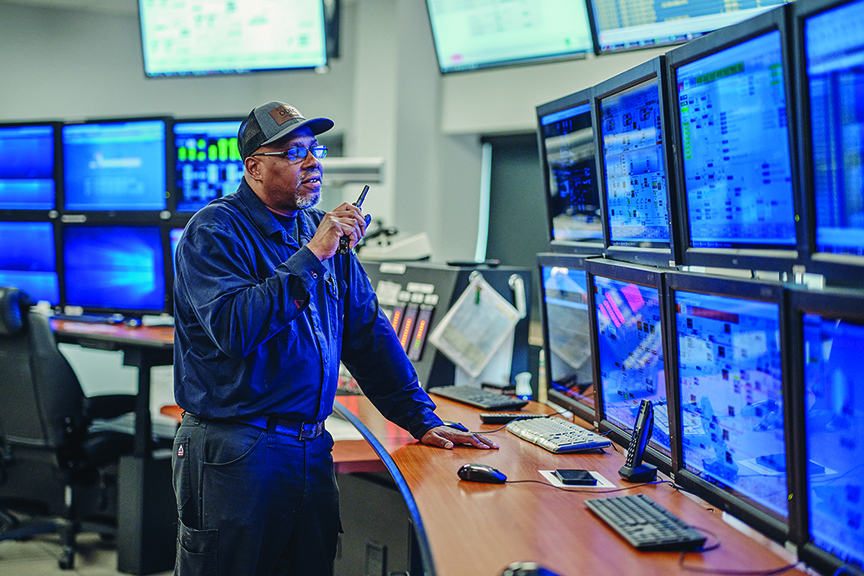
Beyond G&Ts and your local electric cooperative, the electricity network gets bigger. Virginia, Maryland and Delaware are states served by PJM interconnection, a regional transmission organization. PJM acts much like an air traffic controller, coordinating power generation and movement across 13 states and Washington, D.C., including more than 67 million customers and 1,400 power generators.
PJM doesn’t own power generation. Instead, it directs which power generators are used and when, telling them when to turn on and helping support the flow and affordability of electricity across its region. When one generator can produce electricity at a lower cost than others, the entire region benefits. During periods of high demand, such as extreme weather, PJM also redirects power within its region to ensure electricity is available where it’s needed most.
INCREASING DEMAND AND INCREASING RISK
More electricity is being used every year. As demand for power rises at an unprecedented rate, maintaining a reliable and affordable supply of power is more important than ever.
In recent years, our lives — our homes, cars, devices and technology, and businesses — have become more dependent on electricity, placing even more strain on the grid.
Imagine the electrical grid as a large reservoir. The inflow pipes represent electricity generation, and the outflow pipes represent homes and businesses that consume electricity. Demand is rising so quickly that more water is flowing out than flowing in. If the imbalance continues, the reservoir drops to dangerously low levels, threatening reliability for everyone downstream.
While demand increases, many traditional fossil-fuel power plants across our nation have been retired, or are slated to retire, as the nation looks to reduce its reliance on coal and natural gas. State policies that are disincentivizing new dispatchable generation resources compound the problem, as plants are being shut down faster than replacement resources are being built.
Adding new generation has challenges, including siting and permitting, regulatory requirements, rising material costs, construction time and a long queue of projects waiting to be approved and connected to the grid. Decisions between always-available baseload power and renewable resources also involve political and economic considerations, along with reliability, affordability and environmental responsibility concerns.
Finally, the electric grid itself needs upgrades to handle growing transmission demands as more electricity moves through the system — just like internet and water supply systems must be upgraded to handle more volume.
If PJM can’t meet increasing demands, the reliability we all depend on is at risk. It’s a challenge G&Ts, grid operators and distribution cooperatives, like yours, are working together to navigate.
Electricity isn’t just important, it’s critical — and essential for our future. G&Ts and local electric cooperatives are continually evaluating new strategies and emerging technologies to meet growing power needs.
Though the grid, the industry and demand have changed, one thing hasn’t: Electric cooperatives remain committed to ensuring reliable, responsible, affordable power is there when you need it, every hour of every day.