
Distribution automation helps power flow consistently
January-February 2026
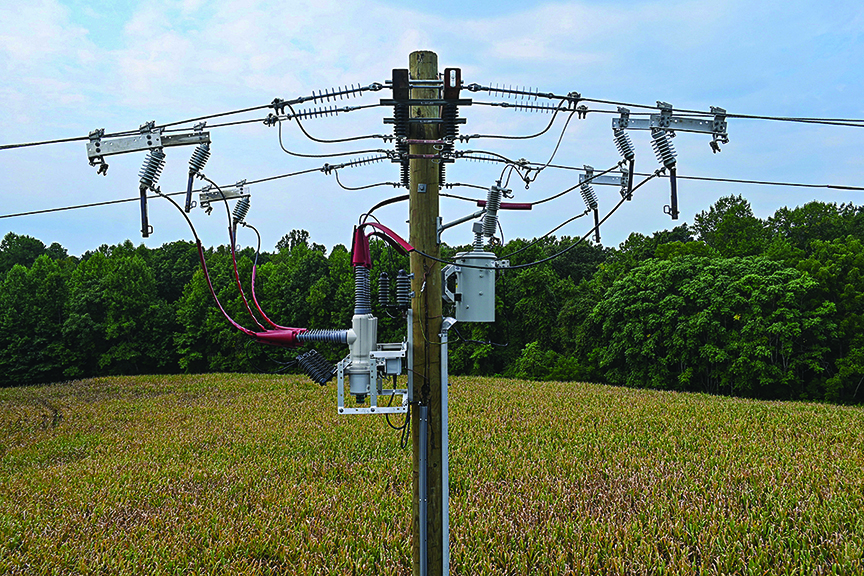
DA devices installed on a power pole bolster reliability and help members stay powered even during storms.
by Cathy Cash, Contributing Writer
Staying online uninterrupted by a power glitch seems more important than ever. Today, it’s increasingly possible thanks to advanced energy technologies that can instantly rearrange electricity flows to areas hit by storms or other disturbances.
Distribution Automation, also known as DA, refers to a powerful set of tools that includes automated sensors, communications systems and data analytics, enabling electric utilities to monitor power lines, field equipment and generation facilities in real time.
Equipped with these DA tools, electric cooperatives can detect an outage and isolate it in real-time from their control rooms before sending out field crews to repair damaged power lines.
“Distribution automation helps electric co-ops deliver reliable, high-quality service to members when today’s world demands it most,” says Ravindra Singh, senior principal of DA for the National Rural Electric Cooperative Association.
Some call DA a self-healing electric grid because application such as FLISR — fault location, isolation and service restoration — can automatically reconfigure the system in response to disruptions.
Here’s a snapshot of how it works. When power lines are damaged or shorted by storms, critters or a natural disaster, DA systems can reroute electricity from the source to unaffected parts of the grid. This allows electric service to continue uninterrupted to a community that would otherwise suffer an outage.
DA doesn’t just help prevent outages. This suite of technologies can save electric co-ops and their members money by reducing inspection time for field apparatus such as transformers, substations and power lines.
With real-time field measurements from DA technologies, a co-op gains situational awareness of its electricity network and can minimize unnecessary maintenance activities, truck rolls and crew dispatches to examine lines, locate damage and make repairs.
“Power distribution grids are evolving from being a passive network to a more active network,” says Singh. “With DA technology and its analysis of network data, co-ops can see their system’s assets, how they are operating and what energy resources are on their power lines to support better quality service and reliability.”
Without DA, a co-op may not know where electric vehicles, rooftop solar, residential batteries, generators and other distribution resources are being added or operated on its system by its members. This can be a challenge when it comes to managing peak demand and having to curtail energy to sustain reliability.
Electricity demand is expected to grow as new types of loads — such as data centers, crypto mining and EVs — expand, according to industry forecasts. So, it makes sense for utilities to optimize the use of their existing infrastructure or equipment to keep costs in check.
With DA, electric co-ops can better manage and expand their systems and respond to crises safely and efficiently while their members enjoy reliable, uninterrupted service.
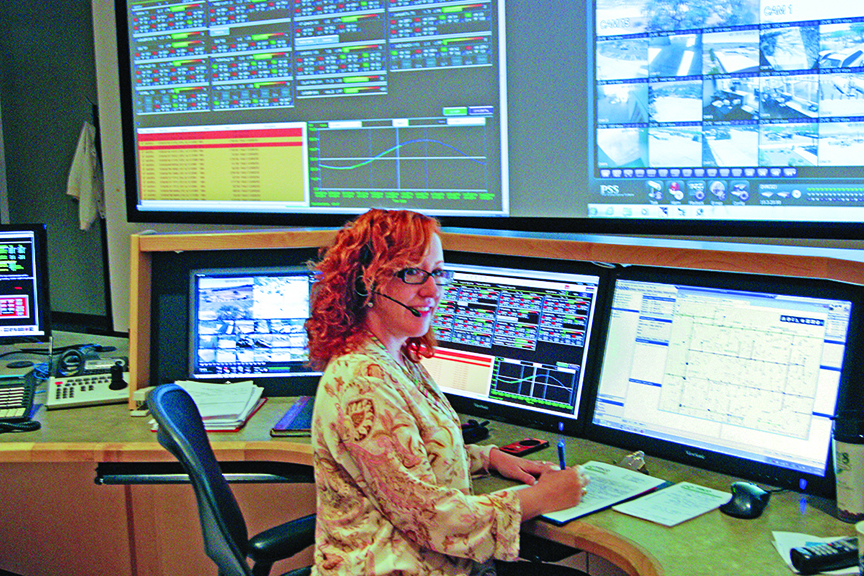
With distribution automation technology, co-ops can see their system’s assets, how they are operating and what energy resources are on their power lines.
Cathy Cash writes on cooperative affairs for the National Rural Electric Cooperative Association.