
Celebrating the first decade of Cooperative Living
January-February 2026
by Laura Emery, Staff Writer
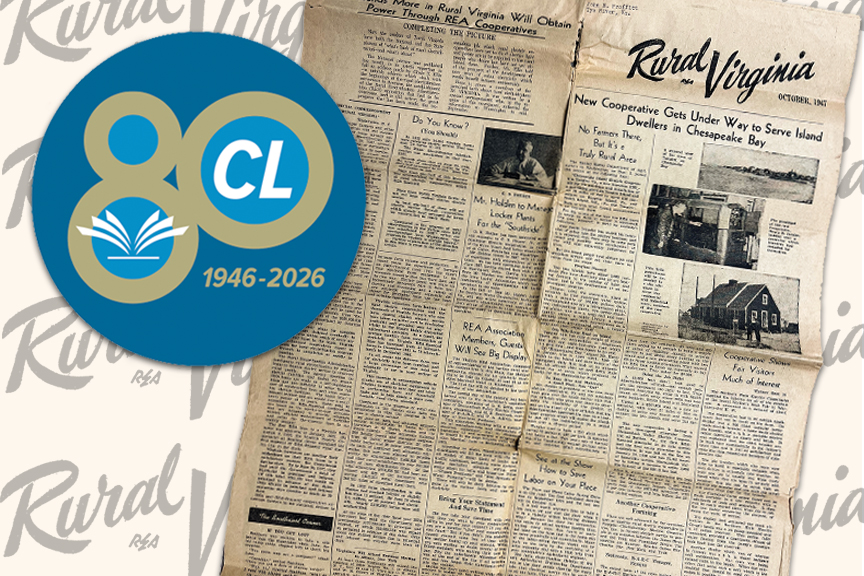
In celebration of Cooperative Living magazine’s 80th anniversary, each issue this year will spotlight one of the eight decades since this publication — first introduced in October 1946 — began inspiring, informing and connecting electric cooperative members.
The magazine’s first decade (1946-1956) unfolded during the years just after World War II, a time when rural electrification was transforming life across Virginia. During its first decade, Rural Virginia, a broadsheet newspaper, had two editors. It was under W. P. McGuire’s blue pencil and capable eye that the fledgling publication was guided through its infancy. In 1951, Alexander Hudgins assumed the role of editor and continued the mission with a fresh perspective.
The newspaper kept members informed on the rapidly expanding rural electrification program and celebrated the cooperative spirit that continues to define the magazine’s pages eight decades later.
REACHING RURAL HOMES
The response to Rural Virginia’s debut issue, which reached 22,000 homes and businesses at an annual subscription cost of 60 cents, was overwhelmingly positive. Readers praised the publication as informative, interesting and useful — providing a front-row seat to a rapidly changing world. “I sincerely hope that this publication will enjoy eminent success,” wrote William N. Tuck, Virginia’s then-governor, in a letter to the editor.
At the time, approximately 3 million American farms — of which more than 130,000 were in Virginia — still lacked electric service. When it came to schools, only four of the 100 counties in Virginia, both rural and urban, had electricity.
The impact of electrification in Virginia was so significant that Rural Virginia dedicated space within its pages to listing the names of residents who had received electricity in their homes through an electric cooperative. It was, as McGuire explained, to show the power of people joining together for a common cause to “do what none of them could have done alone.”
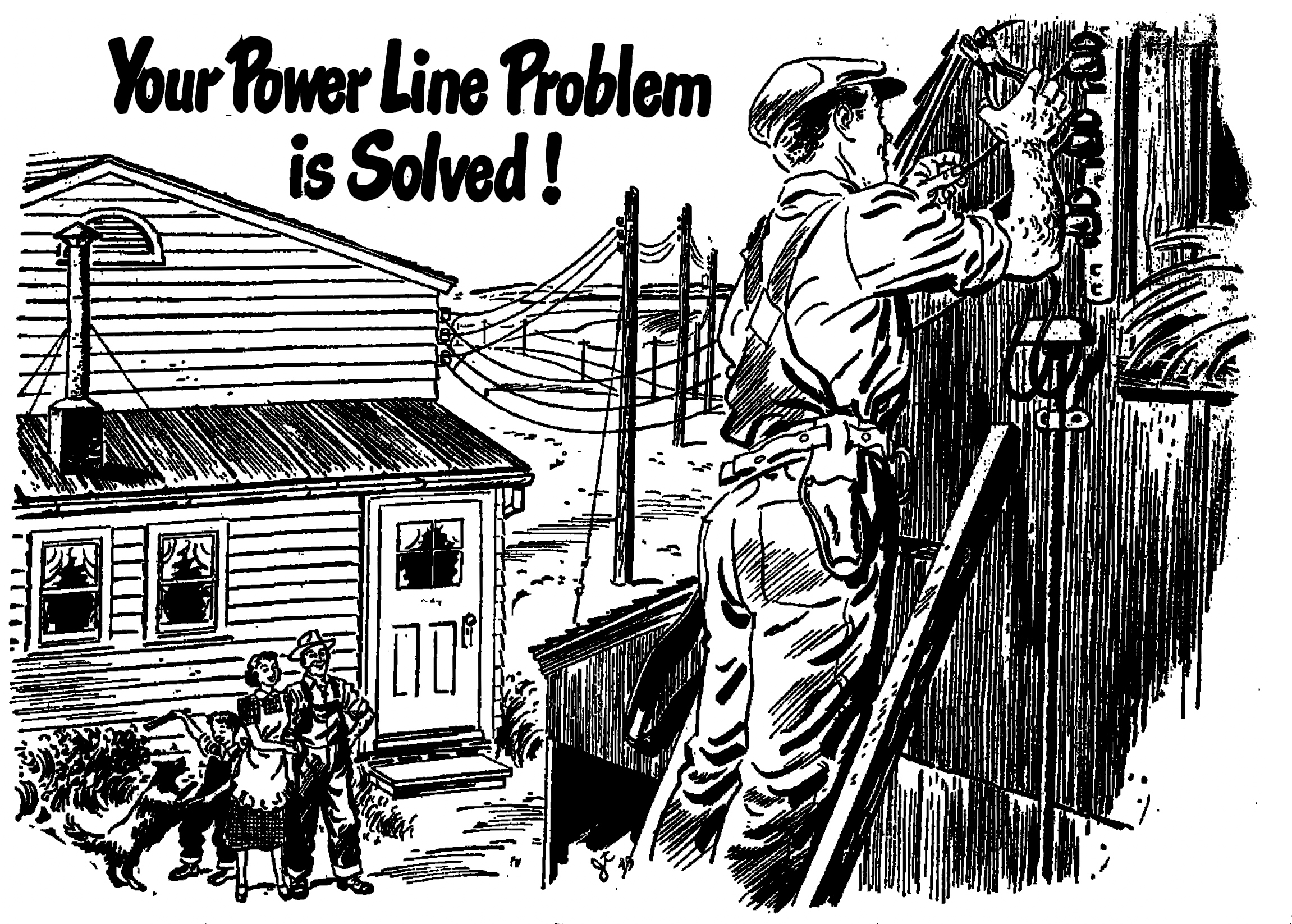
In the magazine’s early years, rifle fire hitting insulators was a frustrating cause of power outages that affected homes, farms and small businesses — a problem that, remarkably, persists in 2026. An article in Rural Virginia spelled out the consequences plainly: “When your electric current stops flowing, you know that your lights go off, or won’t turn on; that your washing machine, your milking machine, your cream separator, your shop grill and grindstone are stopped; or — even more ‘deadly’ — your wife’s iron won’t warm up.”
But there was more to this new publication than just matters related to rural electrification. It included articles on fashion and style, sewing and crochet patterns, cartoons, recipes (for everything from molded salads to biscuits promising to be “the envy of all your friends”), jokes, poems, letters to the editor, youth-centered content and crossword puzzles.
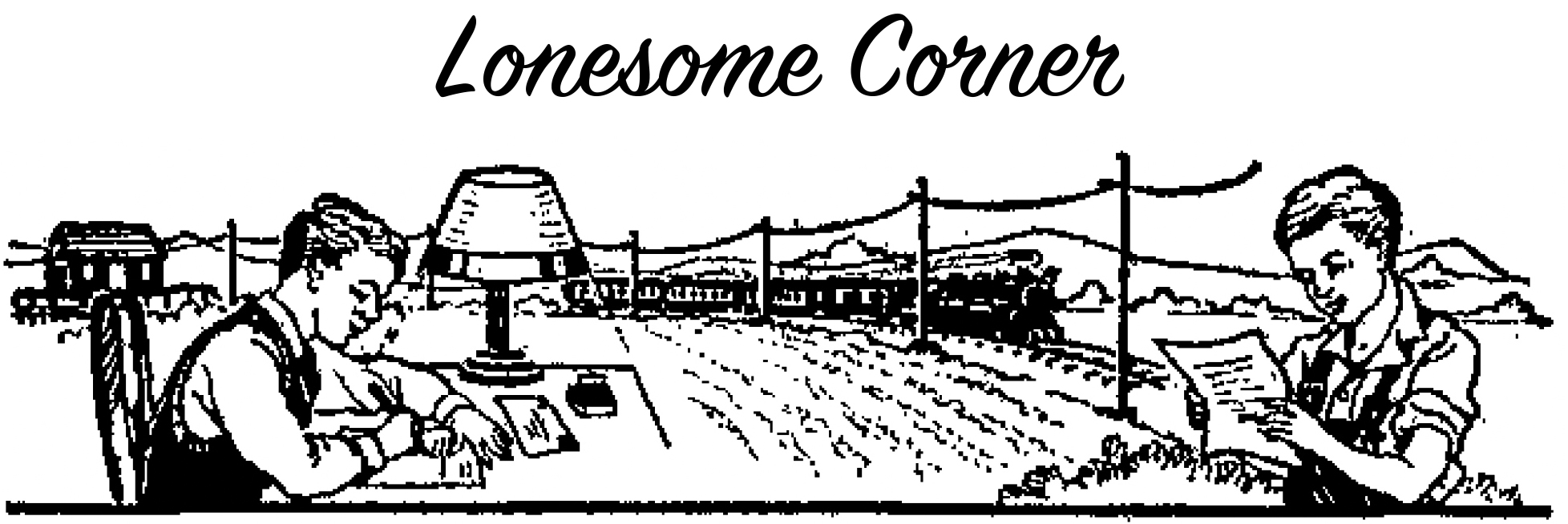
The “Lonesome Corner” was one of the newspaper’s most beloved features, connecting young people long before cellphones, text messages and email existed. To find pen pals, young readers submitted brief personal descriptions. Job aspirations reflected the time, with young women expressing interest in becoming housewives, nurses, secretaries or teachers. “Hobbies” painted a vivid picture of rural life, from picking cotton and feeding chickens to ironing and cooking.
In the late 40s, Rural Virginia was produced through a gritty process blending craftsmanship and machinery. Articles were typed on manual typewriters and then given to a Linotype operator, who would cast each line of text in hot lead. The metal “slugs” were arranged by hand by a typesetter into page forms along with plates for photographs and illustrations. Once in place, the weighty forms were carried to a rotary press, where massive rolls of newsprint spun through drums and ink met paper.
MUCH ADO ABOUT A TYPO
In Rural Virginia’s second issue, McGuire noted an unfortunate typographical error. He wrote, “There are hundreds of thousands of words in one issue of Rural Virginia, and in these words millions of letters, and a typesetter dropped just one letter last month, and you never heard so much talk about anything in your life!”
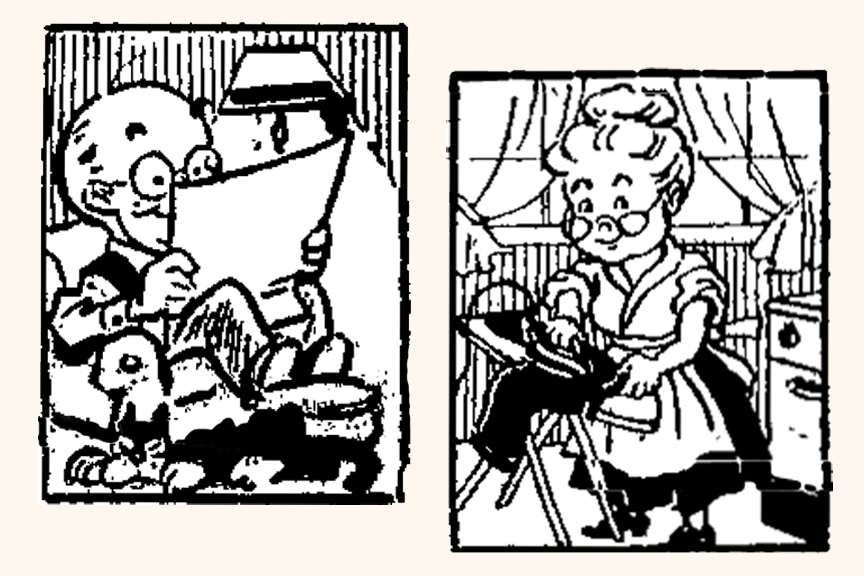
The unfortunate typo was in the “Pa and Ma” column, where unnamed columnists “Pa” and “Ma” alternated writing about everyday life, often focusing on the frustrating or endearing intricacies of marriage.
In the debut column, “Ma” was complaining about “Pa” putting off fixing a hole in the screen door. “Ma” had written, “He won’t think that hole is important until one of the flies it lets in gets into his apple pie.” But the printer accidentally left out the “f ” and made it read “lies.”
It opened an opportunity for “Pa” to complain about “Ma” and her “lies” and how she thinks he has more time to fix things now that he has “new gadgets” with the introduction of electricity. “Ma thinks that all I have to do is push a button and all my work is done,” he wrote. But he mentioned that she is “fixed up,” too, with her new washing machine. He wrote, “She’s saved enough time to sew the buttons on my best shirt and darn the holes in my socks, if only she would.
A SIGN OF THE TIMES
In 1947, Rural Virginia touted the many benefits of running water, a modern convenience still out of reach for many rural households. Articles explained how a reliable water supply could transform daily life — improving sanitation, easing household and farm tasks, and reducing the physical burden on families who had long relied on hand pumps, creek water or wells. J. C. Calhoun, secretary of the Virginia Farm Electrification Council, described one of the benefits: “[Running water] is a great labor saver. The average family spends about 30 eight-hour days each year carrying 20 to 30 tons of water for kitchen use only. Add to this 20 large buckets on wash-day plus the requirements for livestock and the magnitude of this job can be visualized.”
In 1950, around the time Rural Virginia was reaching 100,000 readers, 15 of the 16 electric co-ops in the state were members of the statewide association. In an article that year, P. N. L. Bellinger, president of Craig-Botetourt Electric Cooperative and of Virginia’s Rural Electric Administration Association, said, “The idea that in unison there is strength seems to have been the theme for the association’s organization — or, perhaps, ‘all for one and one for all.’”
Fast forward to 1956 when Rural Virginia had already established itself as an integral part of the electric cooperative community. In 1956, the average cost of power to residential customers, including farm and non-farm, dropped under 3 cents per kilowatt-hour. The average monthly electric bill increased from $6.88 to $7.21. In 1956, there were 1,026 systems in operation, serving 4,244,000 rural consumers.
By the late 1950s, telephone service was becoming available to rural Virginia households — which prompted Rural Virginia to feature articles on telephone etiquette and “telephone personality.” In one such article, it read: “Take time to speak distinctly over the telephone. … Your voice is you says the telephone company, and with color and feeling, it can be an asset.”
Under the rural telephone program, administered by REA, Virginia’s first family to get telephone service made headlines. Gene Dickinson, a Spotsylvania farmer, got the surprise of his life when the first phone call he received on the new line came from President Harry S. Truman. Rural Virginia printed a transcript of the exchange in its August 1950 issue, highlighting the national attention given to REA’s work to expand rural communications. To Dickinson, Truman said, “Your farm is only the first of hundreds of thousands of farms that will get telephone service through the REA program, which has already helped so many farmers get electricity.”
At the end of Rural Virginia’s first decade, it was one of 26 rural electrification statewide newspapers in the U.S. and had become a trusted source of news and storytelling, laying the foundation for the publication as it evolved in the decades to come.
