
Repurposed storage structures turned into livable spaces
January-February 2026

Ryan Kearney converted a silo into his multilevel family home in Culpeper, Va.
by Christina Amano Dolan, Virginia Farm Bureau
From a distance, the rustic exterior of Ryan Kearney’s circular, cantilever home in Culpeper, Va., vanishes into the agricultural landscape — appearing as one of three silos nestled in the family’s winery, brewery and distillery.
“We wanted to add something unique to the property,” Kearney explains.
While converting a new silo into a multilevel family home came with inevitable challenges, Kearney succeeded in crafting a charming conversation starter.
A similar concept is gaining traction in the world of sustainable architecture, with metallic giants inspiring innovation. From chic commercial spaces to outdoor gazebos, ambitious designers and innovative farmers are breathing new life into old grain bins — reimagining their form and function in quirky, unexpected and cost-effective ways.
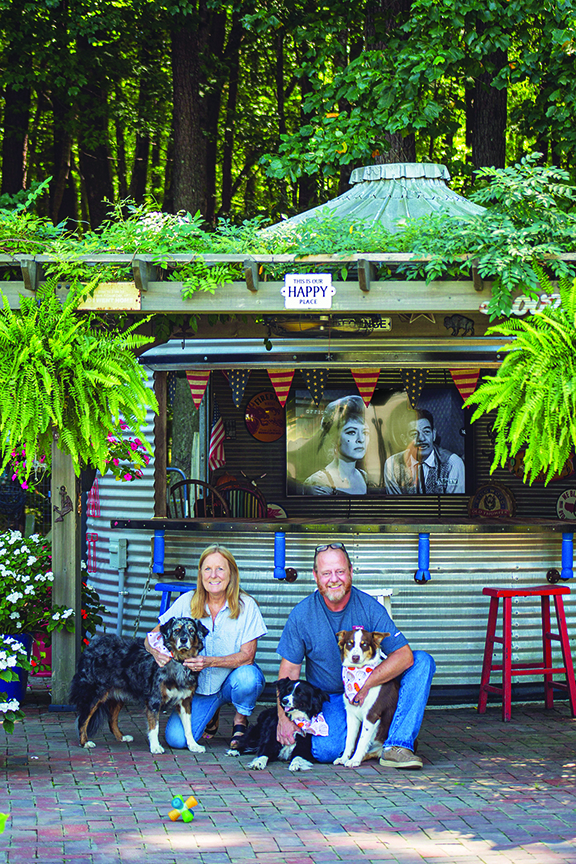
Mary and Mike Barnette’s backyard “binzebo” is their family’s “happy place.”
Longtime Virginia Farm Bureau sales agent Mike Barnette fell down the Pinterest “rabbit hole” in 2021 and stumbled upon an idea. Hoping to build a wooden outdoor oasis, he realized that repurposing an old grain bin was a simpler, more budget-friendly solution.
With a slew of online inspiration, he bought a 1959 grain bin from a local producer, picked up jacks and tips from another producer, called up some friends and began building s backyard “binzebo” — combination grain bin and gazebo.
“The four of us took it down on a Saturday and put it back up on Sunday, and we’ve just been building on it ever since,” he says proudly.
While the 1,000-bushel corn crib didn’t have much agricultural use anymore, the bin came in great condition for a low-maintenance outdoor structure — weathering the elements for decades by design, with the exception of some dust and rust.
“This grain bin will last as long as I want it to,” Barnette notes.
Although the project presented some unique challenges, it was easier than expected. The crew numbered each part before disassembling the grain bin — a critical step, Barnette emphasizes.
With a team of enthusiastic experts by his side, the old grain bin gradually returned to life. Barnette’s neighbor, an engineer, helped navigate the lightly warped, curved structure to incorporate a sliding barn door and custom cedar and red oak bar top.
“The bar took two or three practices until we got our jig right to cut the angles, because the building didn’t end up being exactly round,” he recalls.
The binzebo evolved to include a concrete slope, brick pavers, cable TV and a picturesque pergola for a shaded seating area — creating an enchanting atmosphere with trailing vines and draping wisteria blooms in the springtime.
Just like the recycled structure, everything finds a home in the binzebo. At every turn, delightful knickknacks, silly signs and quirky collectables harmoniously decorate the Barnettes’ “Tin Can,” with many items donated by visitors over the years.
Barnette encourages those interested in tackling a similar grain bin project to take it slow, have patience, lean on the professionals and savor the journey.
As he retires from a 30-year Farm Bureau career, Barnette looks forward to more quality time around the “Tin Can” with his six children and six grandchildren, tackling binzebo additions and going on long-awaited cross-country adventures with his wife, Mary.