
Tried-and-true favorites, from the ground up
November-December 2025
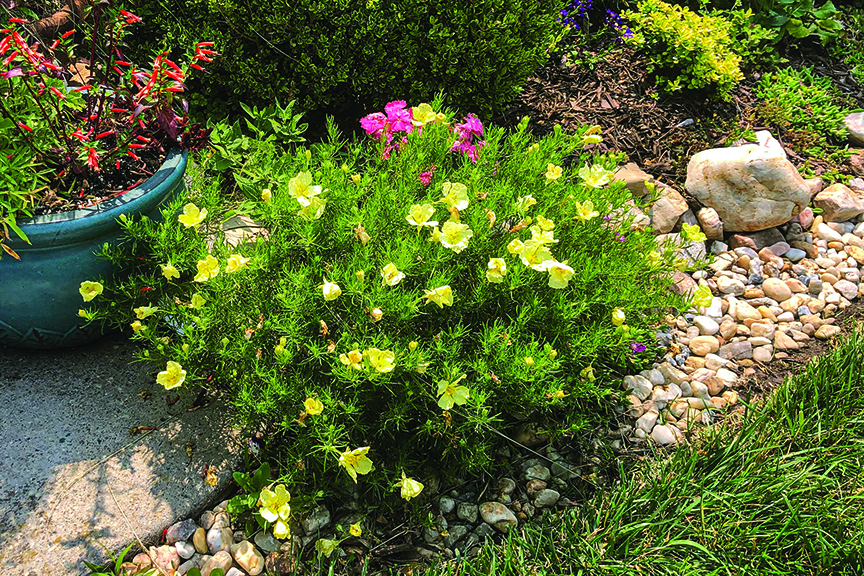
‘Butter Cream’ sundrops produce light yellow flowers that appear in droves all summer long and are set off by the soft, linear foliage.
by Scott Burrell, Contributing Columnist
Experience is the gardener’s greatest tool. Over time, we learn which plants endure, which ones demand too much and which ones reward us season after season. If your goal is a long-lived and low-maintenance garden, here are some of my tried-and-true favorites — starting from the ground up.
At 12 inches tall, ‘Butter Cream’ sundrops have a great presence. This Texas perennial cultivar tolerates nearly all soils with decent drainage. Front your flower bed or edge a walkway with them. Over time, one plant will form a 3-feetwide mound, well-clothed in light yellow flowers through summer. Additional choices of similar height are corydalis, with early-spring spike-like racemes of bright yellow flowers — and the upright fronds of Selaginella involucrata, a spike moss that is low-key but wonderful.
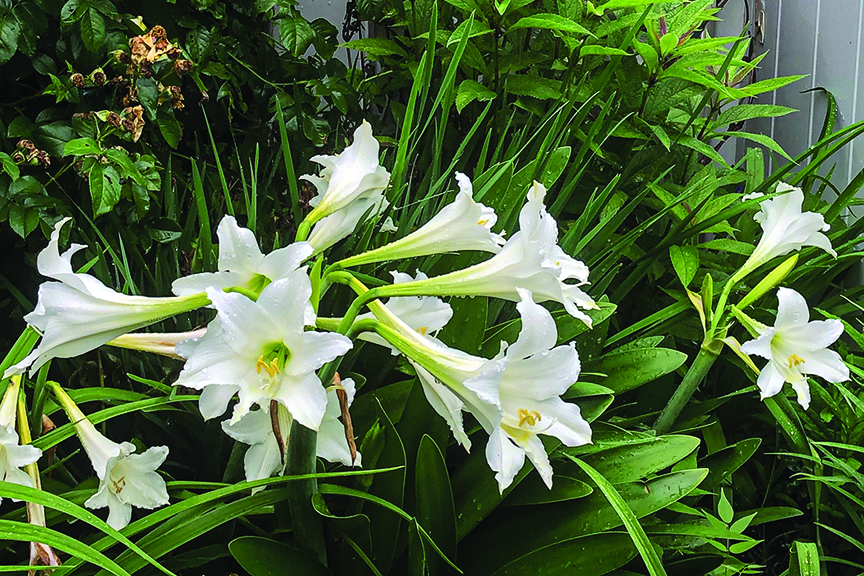
Hippeastrum johnsonii, a close relative to amaryllis, is hardy in Zone 7. With its large bold flowers and striking foliage, it is a standout.
Want to take on a challenge? Plant Hippeastrum johnsonii, a cousin to amaryllis that is more often encountered in coastal gardens. I have found it to be perfectly hardy in Zone 7 and with a fall mulching-in, it should thrive in Zone 6. I like its hardy, dense, thick leaves topped in early summer with large flower buds that open at 24 inches tall with four to six large white trumpets per stalk. This perennial blooms better in wet summers and appreciates periodic additions of organic soil.
The Formosa lily is a long-lived winner with incredible fragrance and flowers similar to Hippeastrum, but it grows on stalks that are 6 to 7 feet tall.
Speaking of trumpets, I love the palpable excitement I feel when the Asiatic lilies come into bloom, some varieties topping out at 9 feet tall. The voles and vagaries of weather and soil dampened my enthusiasm for lilies years ago. Then along came the Formosa lily, a cut above the rest. Though shorter than some, it tops out at 6 to 7 feet tall. I discovered that it is one of the easiest lilies to grow. Give it plenty of sun and enriched loamy soil for best results.
What about the “bones” of the garden — some permanent structural elements when the landscape goes dormant? I strongly suggest the Japanese maple, which can grow 6 to 12 feet tall, often with an equal spread after many years of slow growth. Lace-leaf Japanese maple is another great choice. Most cultivars prefer some afternoon shade as well as an organically rich soil that drains well. Palmate leaves have deeply incised lobes and can, depending on the cultivar, be green, yellow, red, deep purple, or variegated green and cream. Train its rounded cascading form and open branching habit to create a bonsai (there are online pruning videos to get the hang of it) near a pond or walk. Some cultivars make good container specimens.
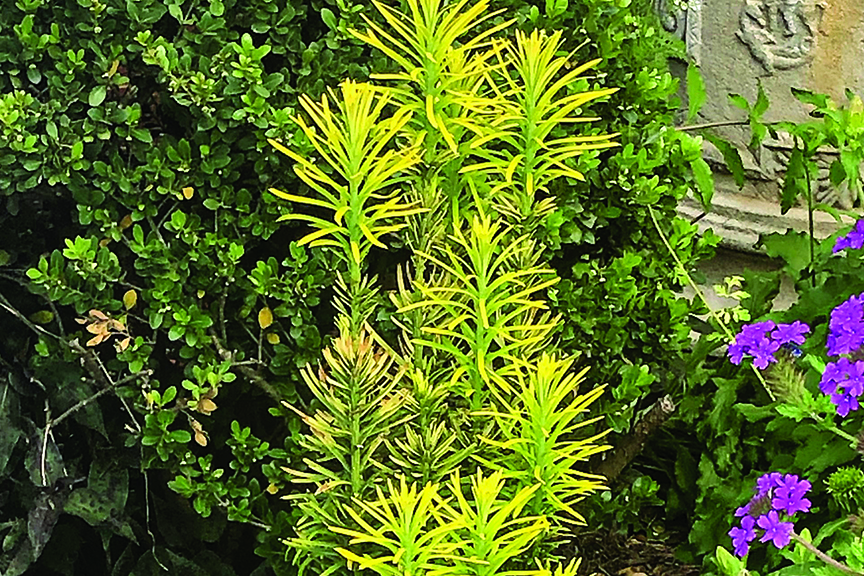
‘Korean Gold’ plum yew is great for small gardens — but be sure to give it some afternoon shade.
Finally, being a conifer enthusiast of sorts, I want to mention two incredible evergreens — ‘Korean Gold’ plum yew, an upright conifer with gold foliage, and Hollywood juniper, an excellent topiary specimen in a container or in the ground, with a mature height of 12 feet.
Scott Burrell is a certified horticulturist who served as the horticulture director for the Virginia Historical Society for nearly 30 years.