
The birth of the rural electric power cooperative
November-December 2025
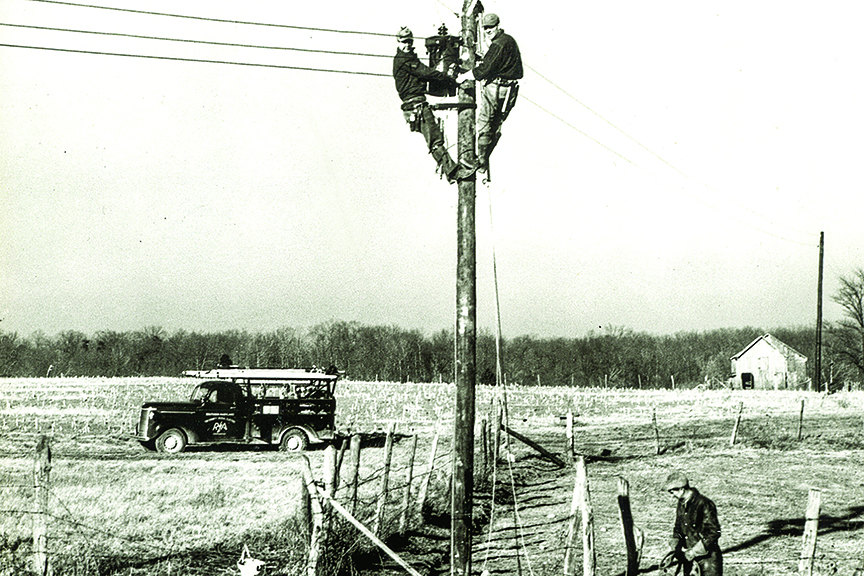
In 1935, the REA was created to help bring electricity to rural communities, providing a source of expertise and financing for a new concept in energy.
by Scott Flood, Contributing Columnist
These days, it’s hard to imagine what our daily lives would be like without electricity. Most of us act as though electricity has always been available, taking its presence for granted.
But 90 years ago, when President Franklin Roosevelt signed the executive order that created the Rural Electrification Administration, nobody in America’s small towns and rural wide-open spaces took electricity for granted. That’s because most of them didn’t have access to it.
Long after city residents became accustomed to enjoying the wonders of electric lighting and the earliest home appliances, residents in more remote areas could only dream about the convenience. The REA was created to change that, providing a source of expertise and financing for a new concept in energy: the rural electric power cooperative.
Besides the areas that these cooperatives served, the most important distinctions between big utilities and the new co-ops was the purpose and who owned them. As the name implies, investor-owned utilities are owned by people who buy stock in the utilities. The primary goal of these utilities is to make money to distribute to investors through dividends and generate higher per-share prices to increase investors’ wealth.
TAKING OWNERSHIP
Electric cooperatives are built and owned not by investors but by the very people they serve. They are led by boards of local residents who are elected by their neighbors to represent them and are responsible for acting in the members’ best interests.
The primary goal of a co-op isn’t to make money but to provide a safe and reliable source of electricity at a cost the local community can afford. As not-for-profit organizations, they receive their money from members when they pay electric bills, then use most of that money to purchase and deliver electricity. They typically set aside some money for the future and emergency needs. And because they employ local people who patronize local businesses, much of the money they earn stays in the communities they serve, boosting the local economy.
Most co-ops purchase electricity on the wholesale power market and turn around and sell it to members at a slight markup designed to cover the costs associated with operating the co-op and maintaining the infrastructure for delivering power. That’s why co-ops don’t make more money when you use more power, or when wholesale prices increase. It’s also why they are dedicated to helping their members reduce energy consumption and lower their power bills.

Electric co-ops employ local people who patronize local businesses. Much of the money they earn stays in the communities they serve, boosting the local economy.
MEMBERS SERVING MEMBERS
Because co-ops exist to serve their members and not investors, they have an obligation to keep the price of electricity as low as possible. When members spend less for their electricity, they have more money to use on what’s important to them.
Co-ops also work to support the area’s economic health through activities designed to bring new employers to the community and help existing businesses expand.
When the leaders of investor-owned utilities make decisions, often their first thought is how those choices will affect the price of their company’s stock. When co-op leaders make decisions, they’re focused on doing the best thing for their members. Instead of trying to impress Wall Street, co-ops want to make sure they’re meeting your needs for power at the best price possible. That’s because they’re truly not-for-profit — instead, they’re for you and your neighbors.
Scott Flood writes on a variety of energy-related topics for the National Rural Electric Cooperative Association.