Five things you may not know about Virginia’s Department of Wildlife Resources
October 2026
(DWR photoS)
by Jack Cooksey, Staff Writer
 If you’re inspired to roam the outdoors, the commonwealth of Virginia gives you a bounty of terrain and biodiversity to satisfy every curiosity, and the state’s Department of Wildlife Resources owns more than 150,000 acres of public land for hunting, fishing and hiking, with more than 200 sites for boat access. Just like those hidden corners of Virginia you’ve yet to discover, here are some other things you may not know about DWR.
1. SELF-FUNDED AGENCY
Although it’s a state agency, DWR doesn’t draw money from Virginia’s General Fund. The lion’s share of its revenue, about 70%, comes from the fees and sales taxes paid by hunters, anglers, trappers and watercraft owners buying licenses, permits, stamps, registrations, titles, outdoors gear and watercraft. All this helps fund the agency’s core mission of stewardship over Virginia’s natural treasures. It works to restore, protect and maintain wildlife and wild places. Just as important, the department connects people to outdoor recreation and educates the public about wildlife and their habitats.
2. BIGGEST EXPENSE: LAW ENFORCEMENT
A pillar of DWR’s mission is protection, and that concerns people and wildlife equally. The eyes, ears, minds and hands of that work are Conservation Police Officers who promote safe outdoor experiences and manage human-wildlife conflicts. About half of DWR’s $25.1 million operating budget supports crime prevention officer recruiting and training, search-and-rescue/recovery operations, enforcing wildlife and boating laws and regulations, and more.
3. FISH STOCKING APLENTY
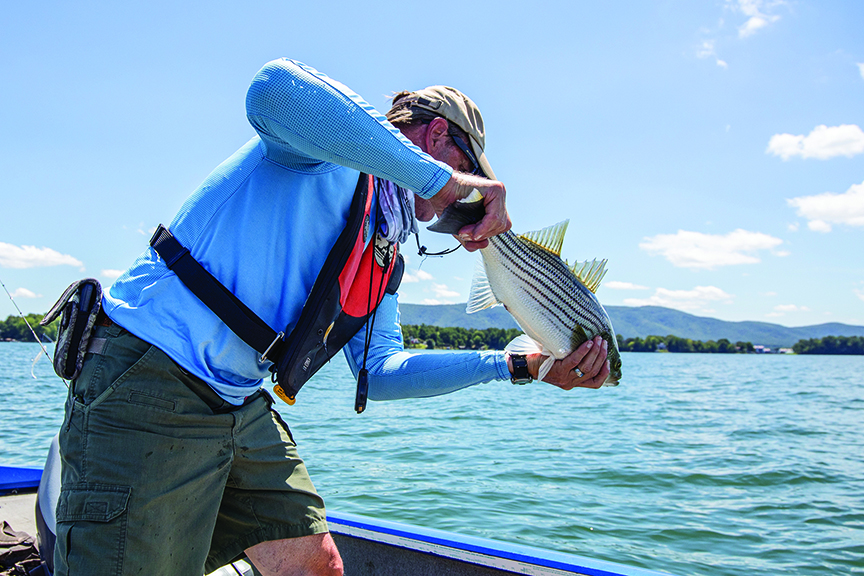
Statewide, DWR operates nine fish hatcheries that produce millions of fish annually that are then stocked into rivers, streams, lakes and urban bodies of water for anglers to harvest (or at least try). The agency’s Aquatics Division grows and raises 12 different species of coldwater and warmwater fish. The two most-raised species are walleye (970,00) and striped bass (870,000).
4. TRUE CRIME PODCAST
When the department’s conservation protection officers in Southwest Virginia received reports several years ago that dozens of whitetail deer had been illegally shot and left for dead, they opened an investigation that lasted months. Authorities later determined the deer had been killed through a method known as spotlighting. An anonymous tip eventually broke the case open, leading to multiple arrests and 238 charges. These are the kinds of stories you can hear on DWR’s YouTube channel from the very officers who worked the cases, all in the name of lawful conservation and recreation. It’s a testament to the hard work of DWR’s expansive role of preserving and protecting the state’s natural resources. You can find True Wildlife Crime at youtube.com/@VirginiaDWR.
5. AN ARCHERY TOURNAMENT AND MORE
In January 2027, the department will stage its third annual DWR Archery Open, an event open to archers of all ages and skill levels. In 2025, more than 150 competitors from across the state participated in the tournament. The agency connects people to many other activities as well. DWR runs programs for hunter and boater safety. Its Project Wild takes wildlife education into schools. And outreach efforts such as the Virginia Outdoor Women Weekend and the Restore the Wild Artwork Competition expand the agency’s reach.